The right in Spain offers no realistic alternatives in terms of coherent and cohesive policies, principles and initiatives. They offer no leadership, ideas or statesmanship. Their opposition is not based on respectable alternatives but on lies, defamation and smears.
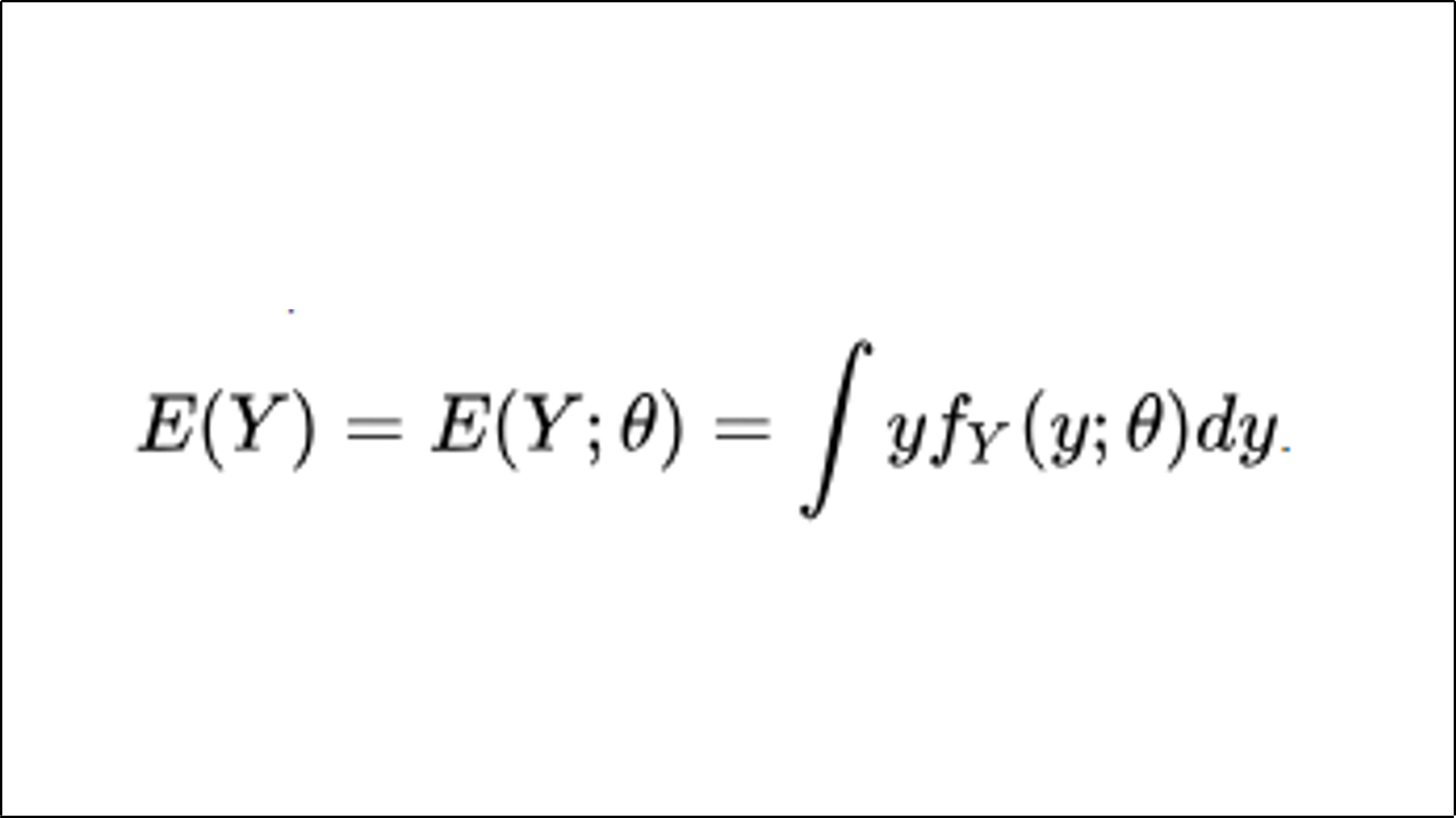
Frequentist inference is a type of statistical inference based on frequentist probability, which treats “probability” in equivalent terms to “frequency” and draws conclusions from sample data by means of emphasizing the frequency or proportion of findings in the data. Frequentist inference underlies frequentist statistics, in which the well-established methodologies of statistical hypothesis testing and confidence intervals are founded.
Conjoint analysis is a survey-based statistical technique used in market research that helps determine how people value different attributes (such as features, functions, and benefits) that make up an individual product or service.
Choice modellingattempts to model the decision process of an individual or segment via revealed preferences or stated preferences made in a particular context or scenario. Typically, it attempts to use discrete choices (A over B; B over A, B & C) in order to infer positions of the items (A, B and C) on some relevant latent scale (typically “utility” in economics and various related fields).
Causal analysis is the field of experimental design and statistics pertaining to establishing cause and effect. Typically, it involves establishing four elements: correlation, sequence in time (that is, causes must occur before their proposed effect), a plausible physical or information-theoretical mechanism for an observed effect to follow from a possible cause, and eliminating the possibility of common and alternative (“special”) causes. Such analysis usually involves one or more artificial or natural experiments.
Bayes’ theorem (alternatively Bayes’ law or Bayes’ rule, after Thomas Bayes) provides a mathematical rule. It is used for inverting conditional probabilities. This enables us to find the probability of a cause given its effect.[1] For example, we know the risk of developing health problems increases with age. Bayes’ theorem allows us to assess the risk to an individual of a known age more accurately. It achieves this by conditioning the risk relative to their age. This approach is better than assuming the individual is typical of the population as a whole. Based on Bayes law, you need to consider the prevalence of a disease in a population. Also, account for the error rate of an infectious disease test. This helps evaluate the meaning of a positive test result correctly and avoid the base-rate fallacy.
Bayesian statistics (/ˈbeɪziən/BAY-zee-ən or /ˈbeɪʒən/BAY-zhən)[1] is a theory in the field of statistics based on the Bayesian interpretation of probability, where probability expresses a degree of belief in an event. The degree of belief may be based on prior knowledge about the event, such as the results of previous experiments, or on personal beliefs about the event. This differs from a number of other interpretations of probability, such as the frequentist interpretation, which views probability as the limit of the relative frequency of an event after many trials.[2] More concretely, analysis in Bayesian methods codifies prior knowledge in the form of a prior distribution.
A balanced scorecard is a strategy performance management tool – a well-structured report used to keep track of the execution of activities by staff and to monitor the consequences arising from these actions. The term ‘balanced scorecard’ primarily refers to a performance management report used by a management team, and typically focused on managing the implementation of a strategy or operational activities. In a 2020 survey 88% of respondents reported using the balanced scorecard for strategy implementation management, and 63% for operational management. Although less common, the balanced scorecard is also used by individuals to track personal performance; only 17% of respondents in the survey reported using balanced scorecards in this way. However it is clear from the same survey that a larger proportion (about 30%) use corporate balanced scorecard elements to inform personal goal setting and incentive calculations.
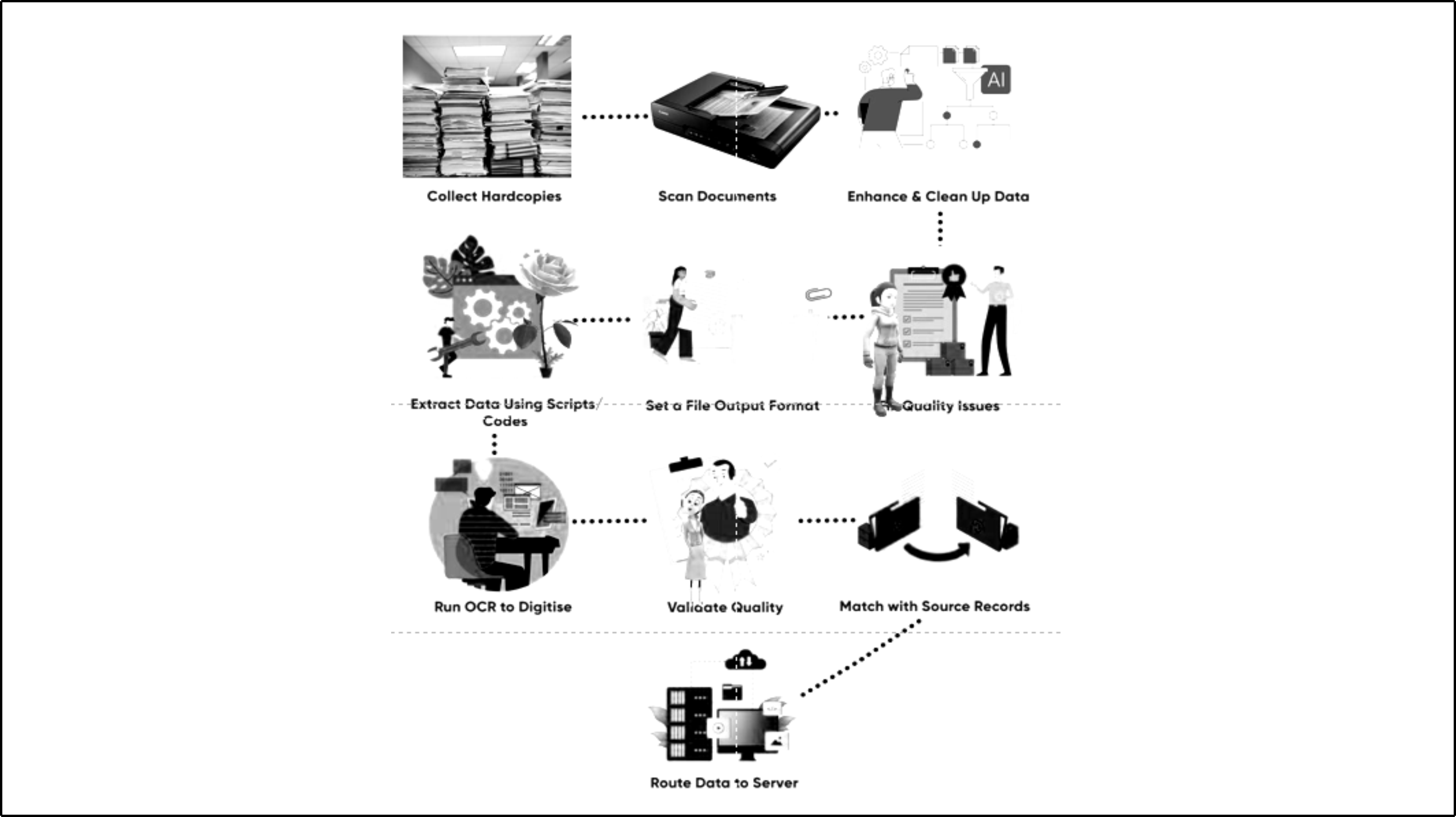
Automatic identification and data capture (AIDC) refers to the methods of automatically identifying objects, collecting data about them, and entering that data directly into computer systems (i.e. without human involvement). Technologies typically considered as part of AIDC include bar codes, Radio Frequency Identification (RFID), biometrics, magnetic stripes, Optical Character Recognition (OCR), smart cards, and voice recognition. AIDC is also commonly referred to as “Automatic Identification,” “Auto-ID,” and “Automatic Data Capture.” http://en.wikipedia.org/wiki/Automatic_identification_and_data_capture





 GOOD STRATEGY