Book Review: Revealing Wealth: Combatting Tax Evasion with Data, Political Will and Technology by Martyn Jones
In an age defined by algorithms, trillion-dollar tech companies, and data flowing across borders at the speed of light, one of the oldest problems in civilisation persists: how the wealthy avoid paying their share of tax. In Revealing Wealth, Martyn Jones argues that the real scandal is not simply that tax evasion exists, but that in a data-rich world we still allow it to thrive.
Two silhouetted figures argue passionately in front of a glowing neon gear.
Welcome to the definitive, hyper-disruptive, AI-augmented, thought-leadership-as-a-service (TLaaS) guide to 2026. If you aren’t already feeling the “frictionless” vibration of a “mind-bending” paradigm shift, you’re clearly still living in the analog dark ages of 2025.
Here are the 7 “revolutionary” trends that Brendan Miggins, the man who never met a buzzword he didn’t want to marry, is definitely getting paid to tell you will “reshape the universe.”
Martyn Rhisiart Jones, Madrid martes 24 de marzo de 2.026
En el mundo en constante evolución del almacenamiento de datos empresarial (enterprise data warehousing), uno de los desafíos más persistentes y críticos es cómo expandir de forma inteligente las áreas temáticas y los datos asociados dentro de la base de datos del almacén de datos central (core data warehouse), manteniendo la integridad arquitectónica, la calidad de los datos y la gobernanza, sin adentrarse en consideraciones de data marts.
Martyn Rhisiart Jones, Madrid Tuesday 24th March 2026
In the ever-evolving world of enterprise data warehousing, one of the most persistent and critical challenges is how to intelligently expand subject areas and the associated data within the core data warehouse database, while maintaining architectural integrity, data quality, and governance, without venturing into data mart considerations.
Here are the most important lessons you can learn from goodstrat.com. These are distilled from the site’s essays, blog posts, and strategic frameworks around data, governance, and technology.
To say that Martyn Jones’s Revealing Wealth is merely a book about tax evasion is like saying the Large Hadron Collider is just a fancy pipe. This is a manifesto for a digital revolution, a technical blueprint for global equity, and a provocative call to arms that arrives just as the old financial order begins to crack.
Below is a look at this seminal work through three distinct editorial lenses.
Book Review: Revealing Wealth: Combatting Tax Evasion with Data, Political Will and Technology by Martyn Jones
In an age defined by algorithms, trillion-dollar tech companies, and data flowing across borders at the speed of light, one of the oldest problems in civilisation persists: how the wealthy avoid paying their share of tax. In Revealing Wealth, Martyn Jones argues that the real scandal is not simply that tax evasion exists, but that in a data-rich world we still allow it to thrive.
Lila de Alba, FT Weekend, New Jersey, Saturday, 7th March 2026
In an age when the airwaves hum with the discordant symphony of populist rage and algorithmic resentment, Martyn de Tours’ Celtic Domination: The Most Significant Influencers emerges not merely as a novel, but as a clarion call for the reclamation of decency in a fractured world. Published amid the lingering echoes of the MAGA era’s toxic legacy, this 428-page hybrid of thriller, manifesto, and philosophical pilgrimage invites readers into a labyrinth where Celtic heritage becomes a bulwark against the encroaching tides of authoritarianism and intellectual decay. De Tours, the pseudonym of the contrarian strategist Martyn Jones, a figure whose prolific output has long danced on the edges of strategy and speculation, crafts a narrative that is as lush as it is urgent, weaving personal introspection with a bold blueprint for collective renewal. It is a book that demands we confront the “dirty war” waged by the far right on the Enlightenment’s fragile gains, while proposing a democratic alternative rooted in plurality, equity, and environmental stewardship. In doing so, it stands as a testament to the enduring power of ideas in an era of manufactured ignorance.
Petula Clarkson, The New Yorker, New Jersey, Saturday, 7th March 2026
In a literary landscape increasingly cluttered with the disposable and the derivative, Martyn de Tours’ Celtic Domination: The Most Significant Influencers arrives like a Molotov cocktail lobbed into a country club. It is a work of breathtaking intellectual audacity, a “Digital Celtic Covenant” that refuses to politely deconstruct the status quo, choosing instead to incinerate it. Part high-octane spy thriller, part “passive Marxist” manifesto, it is the definitive literary antidote to the toxic sludge of the MAGA era and the burgeoning “fetid imperialist conceit” of the extreme right.
Pamela Paddington, Times Literary Supplement, Oxford, Saturday, 7th March 2026
There are novels that announce themselves with a trumpet blast, and others that arrive like weather. Celtic Domination by Martyn de Tours belongs firmly to the latter category: a book that drifts in on a sea-fog of memory, mysticism, political anxiety, and intellectual ambition, and then, rather unexpectedly, begins rearranging the furniture of the reader’s mind.
Heidi Katushka, Times Literary Supplement, Oxford, Saturday, 7th March 2026
In Celtic Domination: The Most Significant Influencers, Martyn de Tours (a pseudonym of the prolific, contrarian strategist Martyn Jones) has produced a work that is at once a novel, a manifesto, a pilgrimage memoir, and a speculative blueprint for pan-Celtic resurgence. Published in 2025 and running to some 428 pages in its paperback edition, the book arrives like a fever dream dispatched from the Camino de Santiago, where the author has evidently spent considerable time walking, talking, and ruminating. The result is a text that defies easy categorization, part sibling reunion laced with intrigue, part philosophical treatise on identity and power, part utopian pamphlet for a “Celtic Union”, and yet it coheres, after a fashion, through sheer audacity and the insistent pulse of its Celtic romanticism.
Review: The Great Data Schism – Why the ‘Schmesh’ is a Schmess
Paula Prada Price, New College Tech Review, Notting Hill, Friday, 6th March 2026
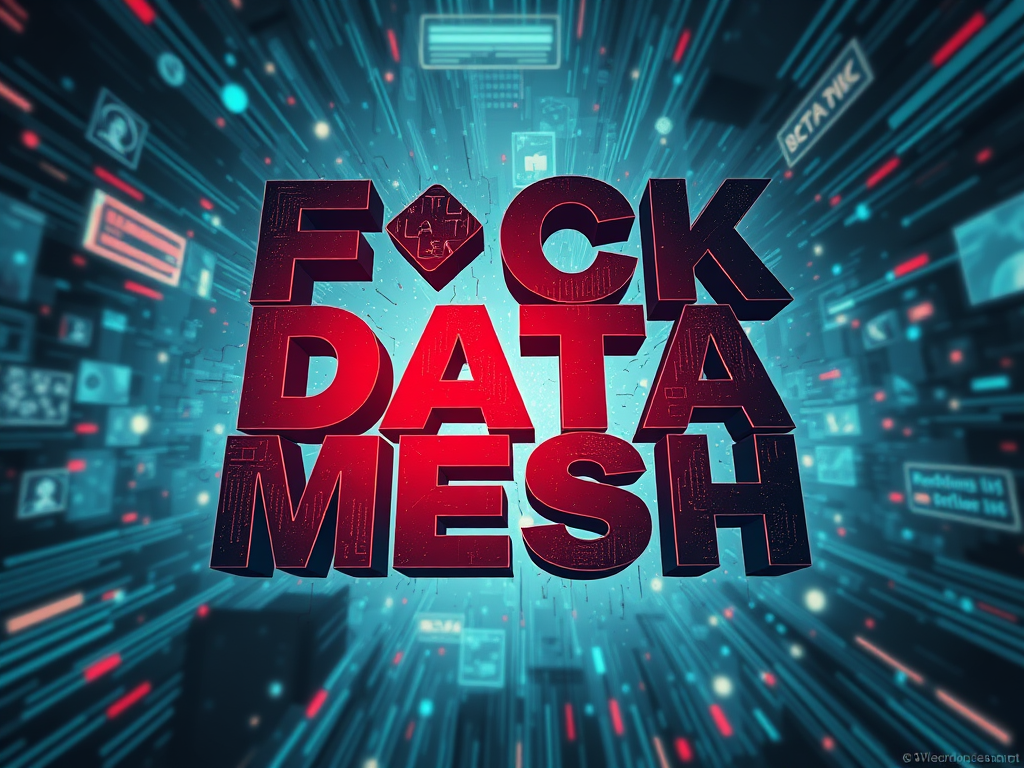
Martyn Jones’s F*CK DATA MESH is a bracing, profane, and essential Broadside against the Silicon Valley hype machine.*
In the glittering circus of modern data tech, where vendors hawk “revolutionary” architectures like snake oil at a Silicon Valley swap meet, Martyn Jones has lobbed what can only be described as a literary Molotov cocktail titled F*CK DATA MESH: The Far Side of Data, Information, and Knowledge. It’s less a book than a gleefully profane haymaker aimed squarely at the jaw of the industry’s latest sacred cow. And reader, it connects.
Review: The Great Data Schism – Why the ‘Mesh’ is a Mess
Lady Amanda Percival, The Wired Wire, Kensington, Friday, 6th March 2026
Martyn Jones’s F*CK DATA MESH is a bracing, profane, and essential Broadside against the Silicon Valley hype machine.*
In the hushed boardrooms of the Fortune 500, “Data Mesh” has become the latest secular religion. It promises a decentralized utopia where data is treated as a product and domain owners are liberated from the “monolithic” tyranny of the central data warehouse. But according to Martyn Jones, a man whose career has seen the rise and fall of more tech fads than a McKinsey slide deck, this new paradigm is less of a revolution and more of a “fraudulent flim-flam sauce” served up by consultants looking for their next utilization spike.
F*CK DATA MESH: A polemic against fashionable nonsense in the data economy
Alicia Altmann, The Middle Digital Review, Chicago, 5th March 2026.
In the technology industry, few phrases age faster than the latest architectural revolution. “Serverless”, “big data”, “blockchain”, each arrives with evangelical certainty before quietly settling into the background noise of enterprise IT. Into this cycle of hype steps Martyn Jones’s gleefully abrasive book, F*CK DATA MESH: The Far Side of Data, Information, and Knowledge*. Its title alone signals that this is less a manual than a polemic: a sharply written protest against what the author sees as the fashionable amnesia of modern data discourse.
F*ck Data Mesh: Martyn Jones’s Hilarious Haymaker at Tech’s Data Delusions
Review by Bella Carmela, WiredWiredWired, Silicon Valley, Thursday 5th March 2026
In the hyper-connected, AI-obsessed circus of modern enterprise tech, where every startup pitches a “revolutionary” data paradigm like it’s the next iPhone, Martyn Jones drops a bomb: Fck Data Mesh*. Subtitled The Far Side of Data, Information, and Knowledge, this 2025 manifesto isn’t your typical dry treatise on ETL pipelines or cloud migrations. It’s a rollicking, profane takedown of the industry’s sacred cows… Data Mesh, Lakehouses, and the endless hype cycle that turns solid data strategies into vaporware. Written with the acerbic wit of a Welsh data veteran who’s seen it all (from mainframes to metadata meltdowns), Jones channels the spirit of Hunter S. Thompson meets Dilbert, urging businesses to wake up before their next “transformative” initiative sinks another billion into the swamp.
THE END OF HONOUR: FROM ABSURDITY TO GLOBAL THUGGERY
By Vanessa Bell, Madrid, 4th March 2026
In Martyn Jones’s The End of Honour: From Absurdity to Global Thuggery, a sprawling and impassioned jeremiad against the moral rot at the heart of contemporary geopolitics, the author diagnoses a profound crisis in the Western liberal order. Published in 2025, the book posits honour not as a quaint Victorian relic but as an indispensable strategic asset, the ethical scaffolding that once underpinned alliances, restrained imperial overreach, and lent credibility to diplomatic endeavours. Its erosion, Jones argues, has precipitated a descent into what he terms “global thuggery”: a world where power is exercised through naked coercion, transactional extortion, and the commodification of international relations into protection rackets. Drawing on an eclectic pantheon of thinkers, from Kant and Lao Tzu to Martin van Creveld and Paul Kennedy, Jones traces this decline from the triumphalism of the post-Cold War era, through the neoconservative adventurism of the Bush administration, to the brazen populism of Trump and his unlikely bedfellows, such as Elon Musk, whom Jones caricatures as a “Bond villain with broadband” fusing Silicon Valley libertarianism with demagogic excess.
THE END OF HONOUR: FROM ABSURDITY TO GLOBAL THUGGERY
By Virginia Stephens, Madrid, 4th March 2026
History, as Paul Kennedy observed in the pages that mapped the rise and fall of the great powers, does not announce its turning points with fanfare. It discloses them, reluctantly, through the accumulated weight of institutional decay, strategic overreach, and, most damningly, the erosion of the codes of conduct that once constrained even the most ruthless of statecraft. Martyn Jones, in this sprawling, ferocious, and occasionally magnificent polemic, has written something that Kennedy’s tradition demands we take seriously: a diagnosis of civilisational decline rooted not in balance-of-payments deficits or military overextension alone, but in the collapse of honour as an operational principle of governance.
By Rebecca Kennedy, The Observer, Chelsea, Wednesday 4th March 2026
The End of Honour: From Absurdity to Global Thuggery By Martyn Jones (martyn.es, 2025)
In the grand sweep of history, as Paul Kennedy might observe, empires rise and fall not merely through the clash of arms or the ebb of economic tides, but through the erosion of moral sinews that bind societies and their leaders. Martyn Jones’s The End of Honour echoes this Kennedy-esque thesis, charting the precipitous decline of integrity in global politics from the unipolar illusions of the post-Cold War era to the brazen thuggery of contemporary strongmen. Written over a quarter-century, this sprawling polemic, part historical autopsy, part diplomatic jeremiad, dissects how the United States, once the self-anointed guardian of liberal order, has devolved into a “basket case” of strategic incoherence, abetted by neoliberal hubris and neoconservative adventurism. Jones, a data strategist turned contrarian commentator, draws on a lifetime of observation, from Welsh nationalism to Spanish socialism, to argue that honour’s demise has unleashed a world of “global thuggery,” where power is wielded not with restraint but as a blunt instrument of self-interest.
By Rebecca Kennedy, The Charmed World Literary Supplement, Madrid, Wednesday 4th March 2026
In his latest work, The End of Honour: From Absurdity to Global Thuggery, Martyn Jones presents a searing, non-linear “collage of collapse” that chronicles the steady erosion of political integrity and the rise of a “surrealist theatre” in global governance. Drawing on a quarter-century of observation, Jones argues that the democratic institutions we once revered as “pillars of integrity” have been hollowed out, replaced by a “theology of managerialism” and a “moronic embrace of the void”.
By Stephanie Charming, Madrid, Tuesday 3rd March 2026
Leadership
In the annals of leadership literature, few works pierce the fog of modern managerial sophistry with the precision of a well-aimed bayonet charge. Martyn Jones’s Good Leader/Bad Leader: The Difference and Why It Matters stands as a clarion call to arms, a treatise that dissects the anatomy of command with the surgical acuity of Sun Tzu and the unflinching moral rigour of Marcus Aurelius. As a veteran strategist in the digital trenches, once hailed as one of the world’s top database minds, Jones draws not from ivory-tower abstractions but from the bloodied fields of corporate and public service battles. His book is no mere manual; it is a manifesto for the embattled leader, a compass for navigating the treacherous terrains of human ambition and institutional decay.
By Stephanie Charming, Madrid, Tuesday 3rd March 2026
Leadership
In Good Leader/Bad Leader: The difference and why it matters, Martyn Jones sets himself an unfashionable task. At a time when leadership literature is awash with nuance, frameworks and neurobiological footnotes, he returns to first principles: good is good; bad is bad. And the distinction, he insists, is neither academic nor optional.
By Jennifer Bartlett, Chelsea, Monday 2nd March 2026
Leadership
In Good Leader / Bad Leader: The difference and why it matters, Martyn Jones provides a visceral, unfiltered, and deeply philosophical examination of leadership that eschews the sanitised language of modern corporate manuals. Jones, a veteran consultant with four decades of experience advising global giants like Adidas, IBM, and the United Nations, crafts a manifesto that is part ethical treatise and part practical field guide for the “leadership masochist”.
Seven years on, the verdict is in, and it’s not flattering. Back in 2019, in a Brussels-fuelled rant channelling the incomparable Bob Hoffman, I declared Agile at Scale the next frontier of IT bullshit: immature, ill-conceived, supercilious, and emphatically not agile. It killed communication with jargon, turned criticism into heresy, and mangled history by ignoring what actually worked. I called it a cultish Frankenstein of Scientology zeal, Vatican pomp, and authoritarian quirks – all wrapped in vainglorious slide decks.
In the quiet underbelly of corporate life, sanctioned software often lags behind real needs. Shadow apps, which are unsanctioned tools employees adopt on their own, continue to flourish. Nowhere is their value more pronounced than in data analytics. Teams quietly sidestep lengthy procurement and rigid platforms. They harness spreadsheets, personal BI instances, open-source scripts, and cloud sandboxes. Far from mere rebellion, these shadow practices reveal institutional shortcomings while delivering tangible gains. Here are seven compelling advantages, viewed through a lens that values both ingenuity and measured reflection.
We asked seven highly engaged professionals for their top advantages of allowing Shadow Apps to thrive. We then requested comments from industry leaders. And here is what they told us.