Tags
AI, AIInnovation, Artificial Intelligence, chatgpt, DigitalTransformation, FutureOfWork, GenerativeAI, SyntheticMedia, technology, UnrealEconomy, writing
By Barnice Blaar, Gretel Grumbleguts and Nifan Farc.

🚀 The Generative AI Revolution: The Future Is Unreal — Literally!
Every so often, a technology comes along that completely reshapes how we work, create, and imagine. Just a few years ago, “artificial intelligence” sounded like something out of a sci-fi movie. Today, Generative AI isn’t just a buzzword — it’s the most transformative force of our time.
And the pace of innovation? Frankly, it’s astonishing.
I’ve been speaking with business leaders across every sector — from healthcare to Hollywood, from logistics to law — and there’s one thing they all agree on: Generative AI is no longer optional. It’s existential.
Let’s unpack what’s really happening — and why the future might be more “unreal” than you think.
🎨 Creativity, Reimagined
Remember when creating a high-quality video ad required weeks of production, expensive equipment, and a large crew? Those days are disappearing faster than a deepfake celebrity apology!
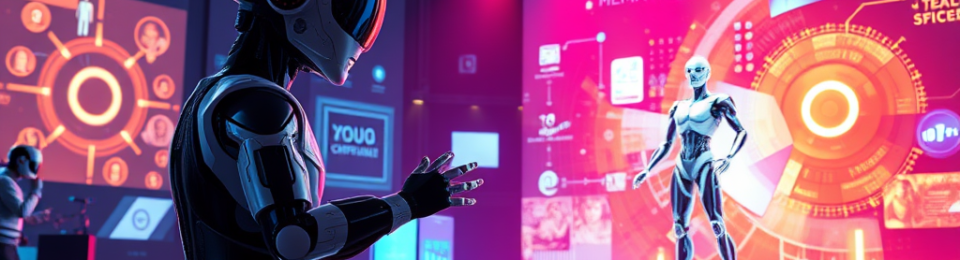
Today, platforms powered by Generative AI can produce entire video campaigns with AI-generated actors who look, sound, and emote like real people. These “synthetic humans” can deliver personalized messages to every customer, in every language, around the clock — without a single coffee break.
I recently saw a demo where a company trained an AI avatar to act as a brand ambassador. Within hours, it generated hundreds of customised product explainer videos for different demographics, all starring the same digital spokesperson. The results were so convincing that most viewers didn’t realise the actor didn’t exist.
It’s not just marketing. Think virtual tutors who can adapt to your learning style, synthetic doctors who can explain diagnoses in your preferred tone, or fully immersive training simulations that respond dynamically to your behaviour. The creative frontier has officially gone off-script — and it’s thrilling.
🌍 The Unreal Economy
We’re entering what I like to call the Unreal Economy — a world where authenticity is being redefined.
In this new paradigm, not everything has to be “real” to be valuable. AI-generated fashion models now showcase clothing that doesn’t exist (yet). Entire real estate tours can take place in fully synthetic environments. Even product prototypes can be designed, tested, and visualised before a single molecule is manufactured.
And let’s not forget the entertainment industry, where AI is becoming both the writer and the performer. A major studio recently used generative tools to bring a long-deceased actor “back” for a cameo — not through CGI trickery, but through a neural model trained on old footage. Audiences were spellbound.
Sure, this raises questions about ethics, transparency, and the definition of “human performance.” But it also opens up unprecedented possibilities for storytelling and expression.
The unreal is becoming the new real — and we’re just at the beginning.
💼 From Cost Centre to Creativity Partner
The biggest misconception I hear is that Generative AI will “replace” people. The truth is far more nuanced — and far more exciting.
Generative AI isn’t about replacing humans; it’s about replacing limitations. It takes on the repetitive, the time-consuming, the low-value — freeing us to focus on imagination, strategy, and empathy.
For example:
- In HR, AI can draft personalised job descriptions and simulate candidate interviews.
- In design, it can create hundreds of mockups in seconds, sparking new human ideas.
- In customer service, AI avatars can handle 80% of queries — but escalate the emotionally complex ones to skilled human agents.
The organisations that thrive won’t be those that merely adopt AI. They’ll be the ones that learn to collaborate with it — where humans and algorithms form creative partnerships that amplify each other’s strengths.
🧠 The New Skillset: Prompt Thinking
Just as we once learned to use search engines or social media, the next critical capability will be prompt thinking — the ability to translate ideas into language that AI systems can understand and act upon.
Generative AI rewards curiosity, clarity, and creativity. The more you experiment with prompts, the more you’ll realise that every word counts. This is a new literacy — part technical, part imaginative — that every leader, marketer, and innovator must cultivate.
I often say: AI won’t take your job. But someone who knows how to talk to AI might.
🔮 The Road Ahead
We’re standing on the edge of an astonishing transformation. Within the next few years, Generative AI will reshape not only how we work, but how we perceive reality itself.
We’ll see digital celebrities with global fanbases — who have never set foot in the physical world. We’ll see personalised entertainment experiences so responsive they feel like dreams. We’ll see businesses built entirely around unreal products and virtual influencers.
And yet, amid all this digital dazzle, the most successful organisations will be those that remember the human purpose at the heart of technology: to make life richer, more creative, and more connected.
Generative AI is not the end of human creativity — it’s the beginning of a new era of augmented imagination.
✨ Final Thoughts
As we navigate this brave new world of unreal possibilities, one thing is clear: the boundaries between what’s real and what’s generated are blurring — and that’s where the magic happens.
If you’re not already exploring how Generative AI can transform your business, your creativity, or your career, the best time to start was yesterday. The second-best time is today.
Because the future isn’t just coming — it’s being generated. 💡
#GenerativeAI #FutureOfWork #AIInnovation #SyntheticMedia #DigitalTransformation #UnrealEconomy
Must-Read Books from Martyn’s Collection
Discover more from GOOD STRATEGY
Subscribe to get the latest posts sent to your email.
 GOOD STRATEGY