
Tags
data, Economics, economy, finance, information, knowledge, News, Politics, social-justice, Tax evasion, tax-haven, taxation, wisdom, world-asset-register
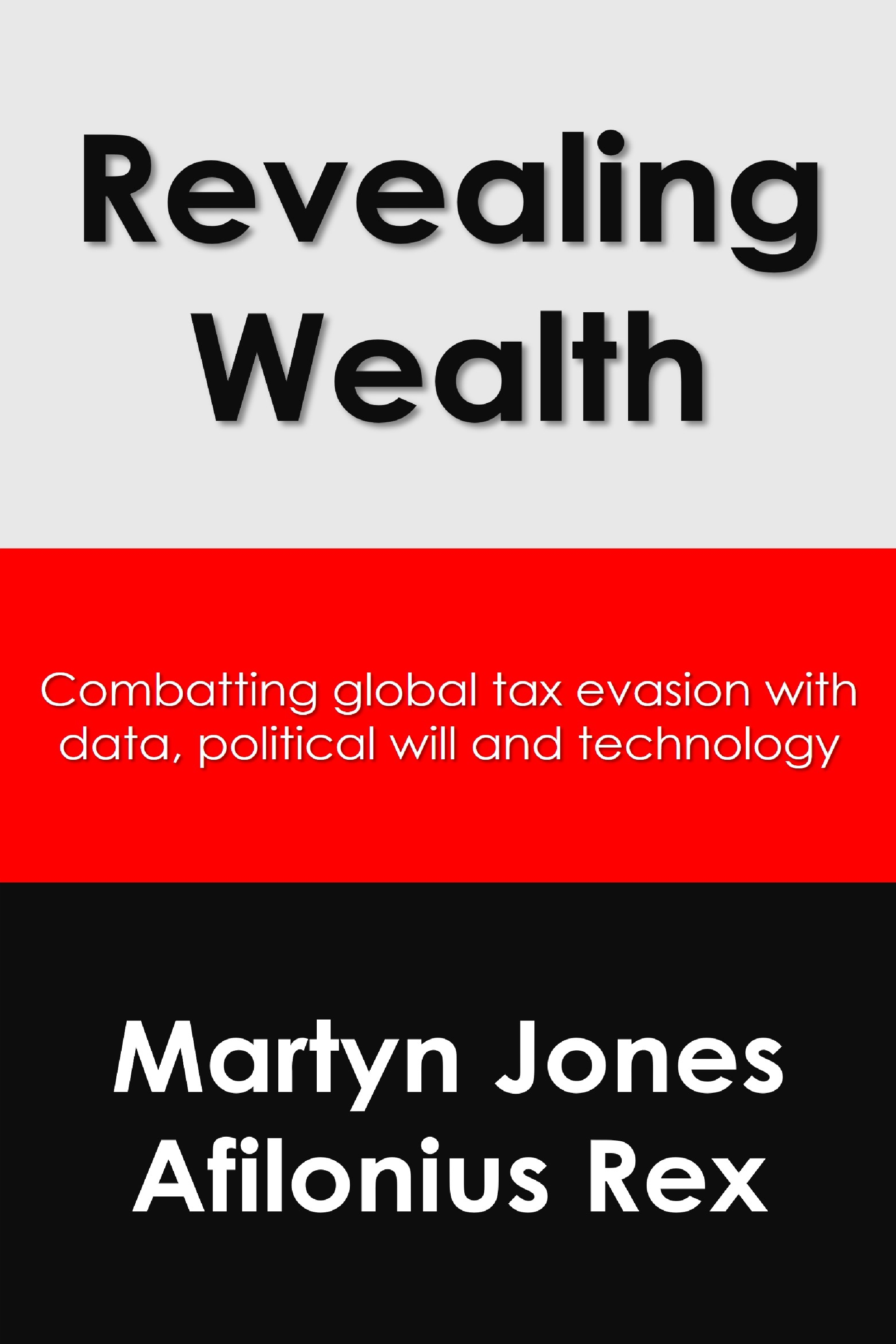
Martyn Richard Jones, A Coruña, 22nd April 2025 – Buy Revealing Wealth
Introduction
If anything, taxes for the lower and middle class and maybe even the upper-middle class should even probably be cut further. But I think that people at the high end – people like myself – should be paying a lot more in taxes. We have it better than we’ve ever had it.
Warren Buffett[1]
Early Learning
Warren Buffett’s position on taxes is not only ethical but also grounded in economic theory. Progressive taxation, which he advocates, serves as an essential tool for wealth redistribution and combating income inequality. Research shows that economies with a more equitable distribution of wealth tend to experience more sustainable economic growth. They achieve better social outcomes, such as lower crime rates and better public health.
In my mind, Buffett’s statement can have another meaning. It can be seen as a criticism of the growing trend of tax evasion among the ultra-wealthy. This often occurs through loopholes, offshore accounts, and legal tax strategies. These methods reduce their effective tax rates well below those of the middle and lower classes. His comments imply criticism of a tax system. He believes it is not progressive enough. It fails to meet the needs of a society where wealth disparity has reached historically high levels.
Buffett’s call for higher taxes on the wealthy coincides with broader demands for structural economic reforms. These reforms address the root causes of inequality, such as access to quality education, healthcare, and affordable housing. Buffett suggests that the wealthy should contribute more. He positions himself as an advocate for a more equitable tax system. This system would help alleviate some of the burdens on the working class. It would also ensure that those who have benefited most from the economic system pay a fairer share.
In conclusion, Buffett’s statement is a call for both economic equity and long-term social well-being. He recognises the challenges of wealth distribution in modern economies. He emphasises the importance of progressive taxation. He also demands greater social responsibility from the wealthiest individuals. His position exemplifies a broader debate. This debate continues to influence discussions about tax policy, social justice, and economic sustainability in the 21st century.
Addressing tax evasion is essential for achieving global justice. In this sense, Buffett is a good guy.
To Begin at the Beginning – The Challenge
Hold this thought: Tax evasion is a silent saboteur of economic justice.
As someone with a deep understanding of philosophy, politics and economics, cutting-edge technology, and the history of power, I cannot overestimate the corrosive impact of tax evasion on our societies’ social and economic fabric. This is not simply a matter of creative accounting; it is a deliberate and fraudulent act that undermines the very foundations of fairness, transparency, and trust on which functioning democracies and resilient economies depend.
Widespread tax evasion deprives governments of essential revenue needed to fund public services, from healthcare and education to infrastructure and social protection. It tilts the economic playing field in favour of a powerful few, leaving honest citizens and small businesses to bear an unfair share of the tax burden. In doing so, it breeds resentment, erodes civic trust, and deepens inequality.
The consequences of inaction are not hypothetical; they are already being felt. Without decisive and coordinated international efforts to combat tax evasion, we will continue to see rising budget deficits, overburdened public systems, and a deterioration of our social contract. This is not simply a technical problem for tax authorities but a moral and political imperative of our time. And it cannot be repeated too often or too loudly that if we fail to confront this criminal deception with the seriousness it demands, we risk compromising our collective prosperity and social cohesion. But if we rise to the challenge—through stricter regulation, global cooperation, and political will—we can recover billions of dollars in lost revenue and restore the integrity of our economic systems. The choice is ours, and time is of the essence.
A Strategy
Hold this thought: We need a strategic plan for data-driven global resilience.
As a senior economist and writer committed to analysing the intersections between policy, technology, and global development, I argue that one of the most formidable challenges of our time—managing complex and multidimensional crises such as food and water insecurity, climate disruption, and economic disparity—demands a bold yet pragmatic response, grounded in a smart data strategy.
The contours of such a strategy are becoming increasingly apparent. We need to build and execute a globally integrated, open, and FAIR (Findable, Accessible, Interoperable, and Reusable) data ecosystem that is not merely aspirational but deeply rooted in the practicalities of real-world implementation. This would allow us to fully utilise a vast and growing universe of information, insights, methodologies, and digital infrastructure.
At its core, this approach would be underpinned by various cutting-edge technologies: the analytical power of big data and AI, the structured reliability of data storage, and the flexibility of modern collaboration and data fabric platforms. Layered with robust statistical frameworks, advanced analytics, and intuitive discovery tools, this system would process data and transform it into actionable insights optimised for different geographies, sectors, and institutions.
Such an initiative cannot rely solely on technology. It must be underpinned by the pillars of political will, sustained investment, international and regional cooperation, and, above all, sound judgment. If implemented with determination, this strategy promises more than just resilience; it becomes a catalyst for shared prosperity.
Indeed, the spillover effects could be profoundly positive. Countries and regions that invest in the architecture and services that support this global data strategy would not only improve their internal governance and decision-making but would also reap economic benefits through job creation, technological innovation, and leadership in the data economy. For businesses, it presents new frontiers for growth, collaboration, and global relevance.
In short, this is more than a crisis management strategy: it’s a plan to prepare for the future in a world increasingly determined by the power of information and computation.
Find and recover
Hold this thought: Recovering the hidden wealth of nations is a post-crisis and pre-catastrophe imperative.
The 2008 global financial crisis served as a stark wake-up call, shedding light on the dark contours of high-value tax evasion and renewing attention to financial accountability. However, that economic shock now pales in comparison to the structural aftermath of the COVID-19 pandemic: an unprecedented disruption that is not simply a recessionary episode but an unfolding global depression with profound systemic implications.
As nations grapple with ballooning deficits, fractured labour markets, and overburdened healthcare systems, a crucial realisation emerges: we can no longer afford hidden capital and unchecked evasion. The time has come for a concerted global movement—an alliance of governments, financial institutions, technologists, and civil society—to expose and recover the hidden wealth that silently undermines the social contract.
This is not simply a moral imperative; it is a practical necessity. Faced with unprecedented financial pressure on public coffers, it is necessary to expose the assets currently sequestered in opaque trusts, tax havens, and abusive loopholes. In this way, we can free up significant resources that could be redirected to rebuilding the pillars of human development: health, education, green infrastructure, and inclusive economic recovery.
An integrated and technologically advanced strategy to combat high-net-worth tax evasion and aggressive corporate tax avoidance would offer multiple benefits:
It would generate billions of dollars in revenue to fund vital public services and accelerate economic revitalisation.
It would expose and correct the structural loopholes that allow global corporations to extract profits from one country while declaring taxable income in another.
It would make money laundering exponentially more difficult, thus strengthening the integrity of our financial systems.
It would attack the root causes of illicit finance, curbing the underground channels that fuel terrorism, organised crime, and political destabilisation.
It would force large corporations to embrace radical transparency, finally anchoring tax obligations in the jurisdictions where true economic value is created.
At this pivotal moment, the convergence of advanced data analytics, financial regulation, and political courage presents a historic opportunity. By forging new instruments of global cooperation—supported by AI, blockchain, real-time reporting systems, and cross-border frameworks for data sharing—we can reaffirm the role of the state not as a passive observer of capital but as an active steward of the common good.
Ultimately, the way forward demands a profound recalibration of our global economic architecture. It requires an ethical awakening: the recognition that the legitimacy of markets must be accompanied by the accountability of those who benefit most from them. Only by recovering this lost wealth can we begin to finance a fairer, greener, and more resilient future for future generations. There is a lot of polemic about the size of high-value tax evasion. On the one hand, you have people who claim that it doesn’t exist. On the other hand, some people claim that there is so much of it that all the world’s ills could be solved if that wealth was revealed, taxed, and redistributed. The academic research into tax evasion indicates that the level of tax fraud is probably somewhere near the equator of those two poles.[2]
What is being proposed?
Hold this thought: Toward a transparent future: The case for a global wealth and land ownership register
In essence, this article advocates for the establishment of a comprehensive Global Wealth and Land Ownership Registry: a living and dynamic system that integrates data flows from national land registries, property registries, and asset declarations into a unified global platform. Such a registry, maintained through secure and interoperable data-sharing frameworks, would constitute a transformative step toward financial transparency and the rule of law in the 21st century.
The justification is both ethical and practical. Today, wealth—particularly real estate and land—is all too easily hidden through complex ownership structures, shell companies, offshore trusts, and anonymous transactions. This opacity not only erodes public trust but also actively facilitates various illicit practices, from large-scale tax evasion and kleptocratic capital flight to sophisticated money laundering operations and the covert financing of extremist networks.
A global registry, continuously updated with verified data from national authorities, would offer tax agencies unprecedented visibility into asset holdings and cross-border financial movements. With advanced analytics and machine learning capabilities built into its architecture, such a system could detect irregular transactions, identify patterns indicative of tax fraud or abuse, and alert regulatory or criminal justice agencies in real-time.
Furthermore, this initiative would empower law enforcement and financial intelligence units to track suspicious capital flows, providing crucial information in the fight against transnational organised crime, corruption, and terrorist financing. It would strengthen the global financial system by establishing a framework for accountability, especially in jurisdictions historically exploited for their secrecy and regulatory laxity.
Beyond law enforcement, a global registry of wealth and land ownership would represent a normative commitment to equity and democratic legitimacy. It would uphold the principle that wealth, particularly when it relates to public goods such as land and housing, cannot be indefinitely excluded from scrutiny or accountability. In doing so, it would help restore balance to a global economy that too often privileges opacity over openness and privilege over equity. In an era of powerful digital tools and increased societal demand for fairness and transparency, the infrastructure for such a registry is no longer a dream of idealists but a necessity for realists. If implemented with appropriate safeguards of privacy, sovereignty, and due process, it could become one of the most far-reaching innovations in global governance of our time.
Just to Recap
In the face of the deepening global crisis, from the 2008 financial collapse to the economic fallout from COVID-19, there is a renewed and urgent call for transparency and financial justice. At the heart of this movement is a bold but necessary proposal: the creation of a Global Wealth and Land Ownership Registry. This registry, fueled by real-time data from national authorities, would reveal hidden assets, expose tax evasion and corporate avoidance, and make it significantly more challenging to conceal illicit financial flows, from money laundering to terrorist financing. Such a coordinated initiative would not only recover much-needed public funds for health, education, and infrastructure but would also reaffirm the ethical principle that wealth must be accountable to the societies in which it operates. Leveraging cutting-edge technologies such as artificial intelligence, large language models, next-generation massive data analytics, and secure digital infrastructure, this strategy could transform international governance, promote equitable development, and strengthen democracies against financial secrecy and abuse. In short, it offers a model for restoring economic integrity in an increasingly interconnected world.
[1] Warren Buffett, known as the “Oracle of Omaha,” is an American businessman and philanthropist, widely considered the most successful investor of the 20th century.
[2] REVEALING WEALTH: USING BIG DATA TO FIGHT TAX EVASION – MARTYN JONES | GOOD STRATEGY. https://goodstrat.com/2020/05/14/revealing-wealth-using-big-data-to-fight-tax-evasion-martyn-jones/
Discover more from GOOD STRATEGY
Subscribe to get the latest posts sent to your email.
 GOOD STRATEGY