
Tags
AI, Analytics, biden, books, bush, Business, clinton, data, data architecture, empire, grand-strategy, hegemony, honor, honour, information, Martyn Jones, obama, pnac, Politics, reagan, real estate, technology, trump, war, writing

Hold up, folks! You’re going to love these! They are amazing, beautiful, classy, dazzling and eminently readable. And that’s an absolute understatement of Mel Brook’s proportions.
As a writer, I have several works to my name. This post highlights some of these works. It also offers a quick link to the Amazon platform, where you can get your editions.
The End of Honour: From Reagan to Trump AMAZON LINK

This book has been a work in progress for over twenty-five years—a labour of thought, reflection, and political introspection that has evolved alongside the tumultuous shifts in American leadership and global complicity, complacency and righteous indignation. It calls on the thoughts, impressions and suspicions of a profoundly personal journey through the ever-changing political landscape, beginning with the final years of the Clinton administration and traversing the presidencies of George W. Bush, Barack Obama, Donald Trump, and Joe Biden. During this period, I have closely observed how each administration has reshaped the fabric of American politics and the global political order, with a particular emphasis on the dynamics of the Atlantic world. This narrative is forged in real-time, reflecting on past events and a window into the forces that continue to shape, colour and define our collective future.
The narrative extends to the current state of American politics under Joe Biden’s recent presidency and again with Trump, featuring Elon Musk’s unexpected and surreal figure—an unelected individual whose influence in the U.S. has raised eyebrows. Musk’s prominence has led some to dub him the “First Baby of the U.S.,” a playful yet pointed reference to his outsized influence and his peculiar role in the American political arena. Musk’s unusual relationship with the political landscape is further complicated by his bizarre association with former and current President Donald Trump. Musk, whom some have mockingly referred to as the “adopted son of Agent Orange,” a nickname for Trump himself. Through these shifting tides of power and personalities, this book seeks to provide an insightful, nuanced, and critical examination of my evolving political education in an age of uncertainty and extraordinary change.
Building Insight: Data, Information and Advanced Analytics in Corporate Real Estate – AMAZON
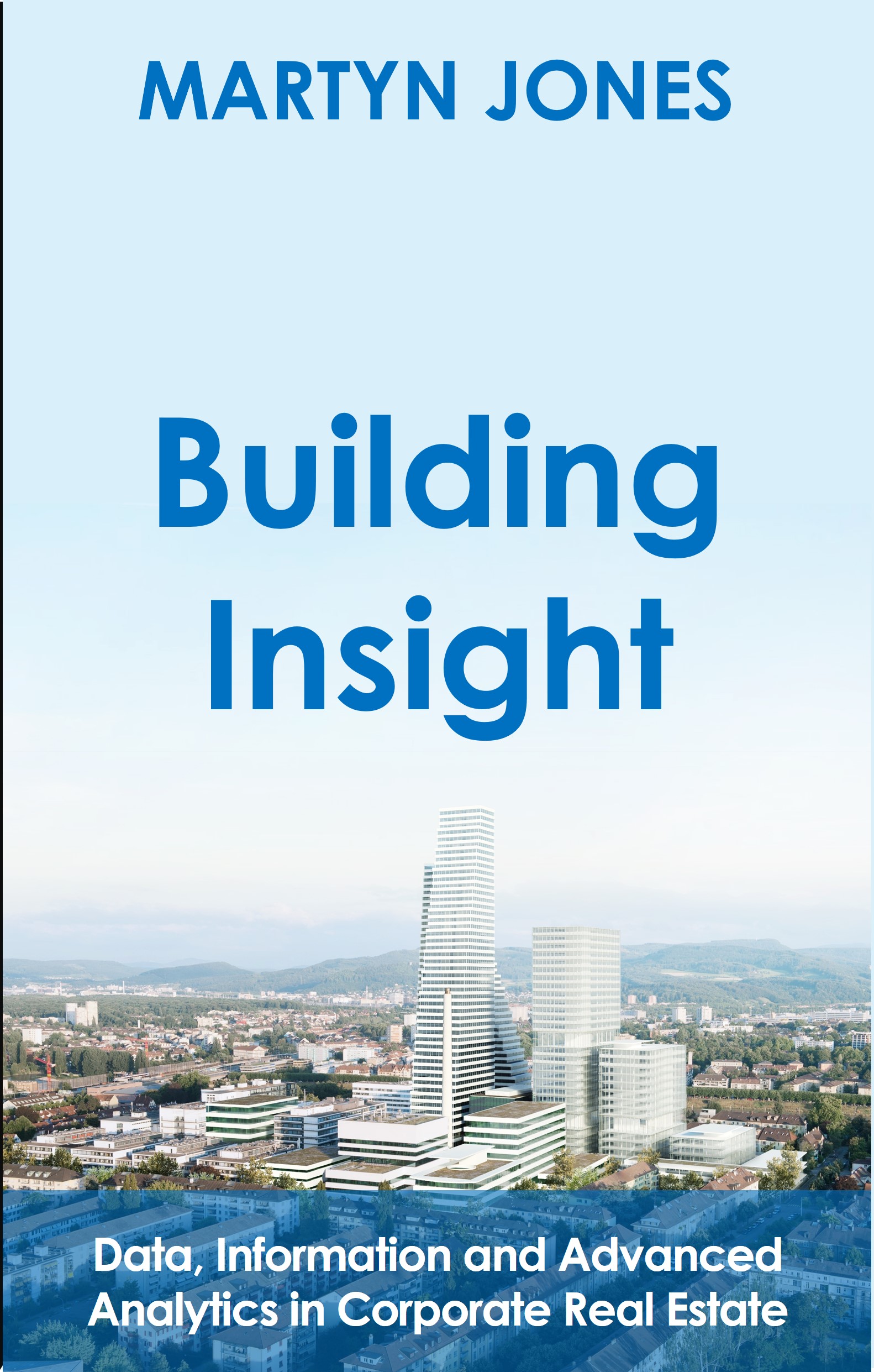
Welcome to the world of corporate real estate management and advanced analytical insight. This is a book about building perception into a part of business that touches everything. Yes, it really is that big.
According to the Cambridge Dictionary, insight is the ability to have a clear, deep, and sometimes sudden understanding of a complicated problem or situation. It’s a sixth sense, it’s knowledge, and it’s understanding. Building Insight simply refers to the creation of insight in corporate real estate management.
There are more than eighteen variations on the themes of real estate management, including, but not limited to:
- Corporate Real Estate Management (CREM): The focus of this book.
- Property Management (PM): Overseeing the day-to-day operations of real estate assets to maximise revenue.
- Asset Management (AM): Maximising the financial value of real estate investments.
- Investment and Portfolio Management (REIM): Managing real estate assets as financial investments.
- Public & Government Real Estate Management: Overseeing real estate assets owned by central, regional or local government.
- Industrial & Logistics Real Estate Management: Managing warehouses, factories, and distribution centres.
This book is primarily about the use of data, information and analytics in contemporary Corporate Real Estate Management. Although the focus is CREM, this is not a book about CREM.
Good Leader Bad Leader: The difference and why it matters – AMAZON
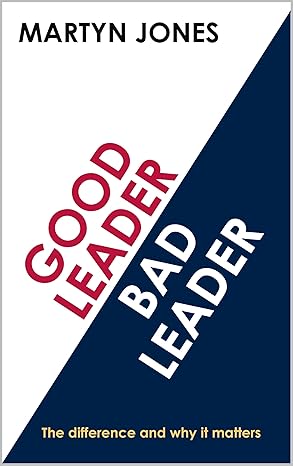
In our world, we have people who are clearly leaders, good leaders, without a shadow of a doubt. And then we have people who aspire to be leaders. But in third place, we have charlatans who pretend to be leaders and surround themselves with people who buy into these farcical chancers’ egotistical pipedreams of bad leaders. This is why Good Leader/Bad Leader is such a relevant work. It doesn’t shy away from uncomfortable truths and instead calls out bad leaders for what they are.
Afilonius Rex
Make Analytics Great Again: Inside Business Insight – AMAZON

What’s going on?
This book, which is about business analytics options, has everything. It’s something old, something new, something borrowed and something blue. Something surprising, something enlightening, something useful, and something cool.
So, what is the purpose of this book?
In my mind, it’s to inform, educate and entertain. To empower thought and curiosity. To improve decision-making. To make people feel at ease with the subjects and themes. To isolate and marginalise those who are arrogant enough not to need dictionaries, education, science, learning and facts.
Who is the audience for this book?
That’s simple. The target audience is anyone interested in analytics, whether as someone with a passing interest, a layperson who wants to be better informed, a student in an associated discipline, or someone who wants analytics to be an integral part of their professional or public lives. Think of this book as being a friendly springboard into a massive world pool of fascinating, engaging and interesting subjects, themes and content.

To paraphrase Manuel Azaña, Prime Minister of the Second Spanish Republic, “If the data punters, grifters and chancers were only allowed to talk about what they really knew about, there would be a great silence. Which would allow us data professionals to actually think about data.”
This is Martyn Jones—the ever-present and ever-persistent data contrarian. I want to tell you some good stories. And just as I did in one of my previous data-oriented books, Laughing@BigData, I am using this time as a platform to discuss data. And by data, I mean all data: big data, data mesh, data in movement, data at rest, AI and data, data analytics, data sciences, statistics, machine learning and multivariate analysis with data. Data up the wazoo, data down the Khyber Pass, data in the well of wisdom, up the tree of life, and then some more.
And, dear data reader, I will tell my digital tales in somewhat wickedly direct, simple and fundamental ways. Still, I also strive to educate, entertain and inform, and in ways that I hope convey humour, irony, and cynicism, served up with a large smattering of good sense, joie de vivre, and schadenfreude.
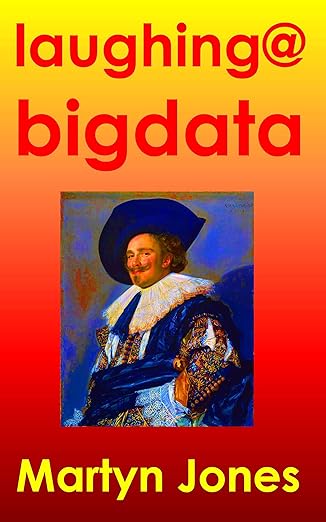
I was born in Wales, in the lovely town of Caerffili at the southern end of the glacial valley known as Cwm Rhymni. Wales was the Saudi Arabia of coal, and the valley of my birth was part of its black-diamond heart. A legend has it that coal was made when local fairies on being bothered by a giant asked the help of an owl, who slew the giant. And, when the fairies cremated the giant’s corpse, the ground burned away, revealing gleaming anthracite coal. And that coal had far more Kinetic value than any other coal mined in the rest of the entire world. So, you see, data isn’t, in fact, the new oil and it certainly isn’t the anthracite coal of Wales. I don’t know why exactly I find this assertion to be necessary, but I’ll just leave it as it is, for all to see. When I was young, a member of my family casually remarked that I wasn’t very observant. “Martyn, you’re not very observant, are you?” I took offence to that as I didn’t think it was true in any way shape or form. So, from that day on, I was determined to be extra-especially observant, which means that unfortunately, I have seen and heard plenty of things that I might otherwise not have seen or heard. In particular, in the world of IT and data. In other senses, it has meant that I have become far more tolerant. This over-observant and ultra-rationalising mentality led me to consign much of my thoughts to bytes and pixels. A lot of the material here was taken from pieces that I had intended to put on the best strategy blog site in the entire universe, which also happens to be mine – the blog site that is, not the universe. When I was young, I couldn’t make up my mind if I wanted to be a rock star, catholic bishop, an actor, a professor, a painter, a writer, a classical guitarist, a settler in the Holy Land, a parliamentary politician or an IT professional. And even now, I’m sure that this eclectic mix of hopes, wants and desires have somehow deeply marked aspects of my personality and as a result some of what you’ll find here. In Zurich, I worked with a senior banker who told me that his theory was that each new generation in their line of business encountered the same challenges as past generations. And that these new folk would inevitably try and reinvent a solution to those challenges, regardless of whether a satisfactory solution existed or not. So in many ways, each new generation would be a reenactment of the story of Sisyphus. The content of this book is based on personal, up-close and intimate experiences of the IT industry in general and data in particular. And it has a lot to do with people, personalities and behaviour. If you find the content polemic, bad-mannered and combative, then don’t worry, it’s not you but rather me, and it’s deliberate. So, if you can handle the rough with the smooth, I think you’ll be delighted, thrilled and maybe even enlightened by what I have to say. This book is intended to be humorous at best and droll at worst. If it isn’t, I might hear from you. Most of the pieces in this book are based on stuff I wrote on my goodstrat.com blog during more than five years of curating it. Since some chapters were written years ago, they may seem a bit dated. But as far as I’m concerned, irrationality is everlasting. Throughout the book, I mention some of the good people and companies I have had the good fortune to work with over the years. But where necessary names have been changed to protect the guilty. Why is this book necessary? Because in terms of IT and data, it strives to inform, educate and entertain. It is said that every person has a book in them. I think I have at least seven, and they are all different. Maybe this is the first of many.
Discover more from GOOD STRATEGY
Subscribe to get the latest posts sent to your email.
 GOOD STRATEGY