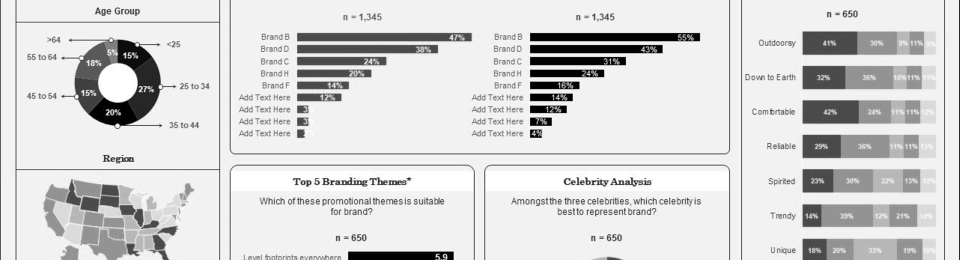

Brand Analytics – Martyn Jones
Brand strength analysis describes efforts to determine the strength a brand has compared with its competitors.
https://en.wikipedia.org/wiki/Brand_strength_analysis
In marketing, brand management is the analysis and planning on how that brand is perceived in the market. Developing a good relationship with the target market is essential for brand management. Tangible elements of brand management include the product itself; look, price, the packaging, etc. The intangible elements are the experience that the consumer has had with the brand, and also the relationship that they have with that brand. A brand manager would oversee all of these things.
https://en.wikipedia.org/wiki/Brand_management
Consider this: Brand analytics is a strategic approach to collecting, analyzing, and interpreting data about a brand’s performance, customer perception, and market positioning. It provides actionable insights for decision-making in marketing, product development, and customer acquisition. By integrating brand analytics into your strategy, you’ll be able to make informed decisions, strengthen your brand identity, and maintain a competitive advantage in the marketplace.
To reiterate, the brand analytics process is a systematic approach to collecting, analyzing, and interpreting data to evaluate and improve the performance of a brand. This process helps organisations understand how their brand is perceived in the market, identify opportunities for growth, and make data-driven decisions to enhance brand equity, customer loyalty, and overall business performance.
The stated benefits of the Brand Analytics Process are:
Improved Brand Positioning: Ensure your brand resonates with the target audience.
Increased ROI: Optimize marketing spend and efforts for maximum impact.
Customer Loyalty and Retention: Build stronger relationships with customers.
Competitive Advantage: Stay ahead of competitors by identifying and leveraging market trends.
Data-Driven Decision Making: Base strategies on insights rather than intuition.
By implementing an effective brand analytics process, companies can build stronger, more relevant brands that align with customer expectations and market demands.
When to use: There are a large number of business use cases, and they include key drivers such as:
Benchmarking against competitors: Identify market position and competitive advantages.
Enhancing customer experience: Align service delivery with brand values.
Evaluating loyalty and retention: Strengthen customer relationships and lifetime value.
Entering new markets: Tailor branding to resonate with regional and cultural audiences.
Identifying opportunities for growth: Discover unmet customer needs and market gaps.
Justifying investments in marketing: Showcase the ROI of branding initiatives.
Launching new products and services: Ensure product messaging aligns with brand identity.
Managing reputation: Protect the brand image and address any significant negative sentiment.
Optimising marketing campaigns: Maximise ROI and campaign effectiveness.
Responding to market changes: Stay competitive by adapting to trends and shifts in consumer behaviour.
Tracking brand performance: Measure brand awareness, loyalty, and sentiment.
Understanding customer perception: Align brand messaging with audience expectations.
When not to use: The following represents a series of reasons for not considering this approach.
When there is a lack of clear objectives, efforts will be unfocused and inefficient. Fix: Define specific goals first.
When there is insufficient data, results may lack reliability or relevance. Fix: Use qualitative research.
When there are high costs or limited resources, analytics may not be feasible for small budgets. Fix: Use cost-effective tools or methods.
When in an early stage, branding analytics may not provide actionable insights. Fix: Focus on brand-building activities.
When there is a short-term imperative, or there are immediate decisions that need to be taken, then brand analytics may take too long to deliver insights. Fix: Use quick feedback mechanisms.
When there is a focus on direct response metrics, brand analytics isn’t suited for immediate performance measurement. Fix: Use direct marketing analytics.
Where there is a limited digital presence, online tools won’t capture enough data. Fix: Use offline research methods.
When there is overwhelming complexity, excess data can obscure insights and delay decisions. Fix: Simplify the analysis.
When it is irrelevant to core business needs, branding might not impact performance significantly in some cases. Fix: Focus on other relevant metrics.
During a crisis and when not having a plan, the use of this approach may render analytics ineffective and without actionable strategies. Fix: Focus on crisis management first.
When there are misaligned organizational priorities, insights won’t be acted upon without stakeholder buy-in. Fix: Ensure alignment and buy-in before proceeding.
When an overemphasis is placed on quantitative data, numbers may miss subtle, qualitative aspects of the brand. Fix: Incorporate qualitative research methods.
When there are data privacy concerns, there is a risk of legal or reputational harm if regulations are violated. Fix: Ensure compliance or use anonymized data sources.
Strengths: Brand analytics offers numerous strengths that make it an essential tool for understanding and improving brand performance, customer perception, and market competitiveness.
It provides actionable insights. Helps refine strategies for better results.
Measures brand health. Tracks key metrics such as awareness and sentiment.
Improves customer understanding. Captures customer perceptions and behaviors.
Helps make data-driven decisions. Takes the guesswork out of brand strategies.
Improves competitive positioning. Highlights strengths and opportunities against competitors.
Tracks campaign effectiveness. Measures the impact of marketing efforts.
Predicts trends. Anticipates customer behavior and market changes.
Improves customer experience. Aligns touchpoints with the brand promise.
Facilitates personalization. Tailor marketing to different segments.
Monitors reputation. Enables proactive brand image management.
Drives innovation. Identify gaps and opportunities for new developments.
Increase ROI. Optimize marketing spend and resource allocation.
Facilitate long-term growth. Build a strong and sustainable brand.
Provide real-time information. Enable agile decision-making during campaigns or crises.
Weaknesses: While brand analytics offers many benefits, it also has limitations that can impact its effectiveness. Recognizing these weaknesses is essential to mitigating challenges and making the most of your insights.
Reliance on data quality is due to the unreliability of information from poor data sources. Possible solution: Ensure data accuracy and representativeness.
Limited context can cause the approach to misinterpret trends without a deeper understanding. Possible solution: Combine analysis with qualitative methods.
An overemphasis on quantitative data misses the emotional and subjective aspects of the brand. Possible solution: Balance quantitative and qualitative information…
Requires considerable resources. Costs and expertise can be a barrier. Possible solution: Start small and scale up analytics capabilities gradually.
Delays in gaining insights can impact decision-making. Possible solution: Incorporate real-time analytics to streamline…
Analysis paralysis: Too much analysis leads to indecision. Possible solution: Focus on actionable insights and prioritize key metrics.
Difficulty measuring intangibles makes it challenging to quantify brand value and emotional connections. Possible solution: Use indirect metrics to infer intangible attributes.
Reliance on digital data excludes offline interactions and behaviours. Possible solution: Combine digital and offline data sources.
Bias in data sources skews insights toward specific demographics. Possible solution: Diversify data sources to achieve broader representation…
Short-term focus neglects long-term brand health in favour of immediate metrics. Possible solution: Include metrics like loyalty and equity for long-term tracking.
Complexity in interpretation: Misinterpretations can lead to poor decisions. Possible solution: Train teams or consult experts to perform accurate analysis.
Limited predictive power makes it difficult to forecast future trends. Possible solution: Combine analytics with market research and scenario planning.
Ethical and privacy concerns: risk of legal and reputational damage. Possible solution: Comply with data privacy regulations and use anonymized data sets.
Over-reliance on tools sidelines human intuition and creativity. Possible solution: Use analytics to complement, not replace, human decision-making.
Multi-channel analytics makes fragmented understanding across multiple platforms difficult. Possible solution: Use integrated platforms to unify data sources…
Passing comments: “Anthropologists speculate that previously there was another species of human-like primates that did not have the brand gene. These proto-humans walked upright and developed primitive tools, but couldn’t tell Jif from Skippy, and believed Evian and Crystal Geyser were pretty much the same stuff. Scientists marvel at their survival.” – Bob Hoffman, 101 Contrarian Ideas About Advertising
Discover more from GOOD STRATEGY
Subscribe to get the latest posts sent to your email.
 GOOD STRATEGY