Tags
AI, Artificial Intelligence, bernard-marr, books, cunts-i-have-known, hollyweird, media, media, writing
Martyn Rhisiart Jones, Madrid, Monday 6th April 2026
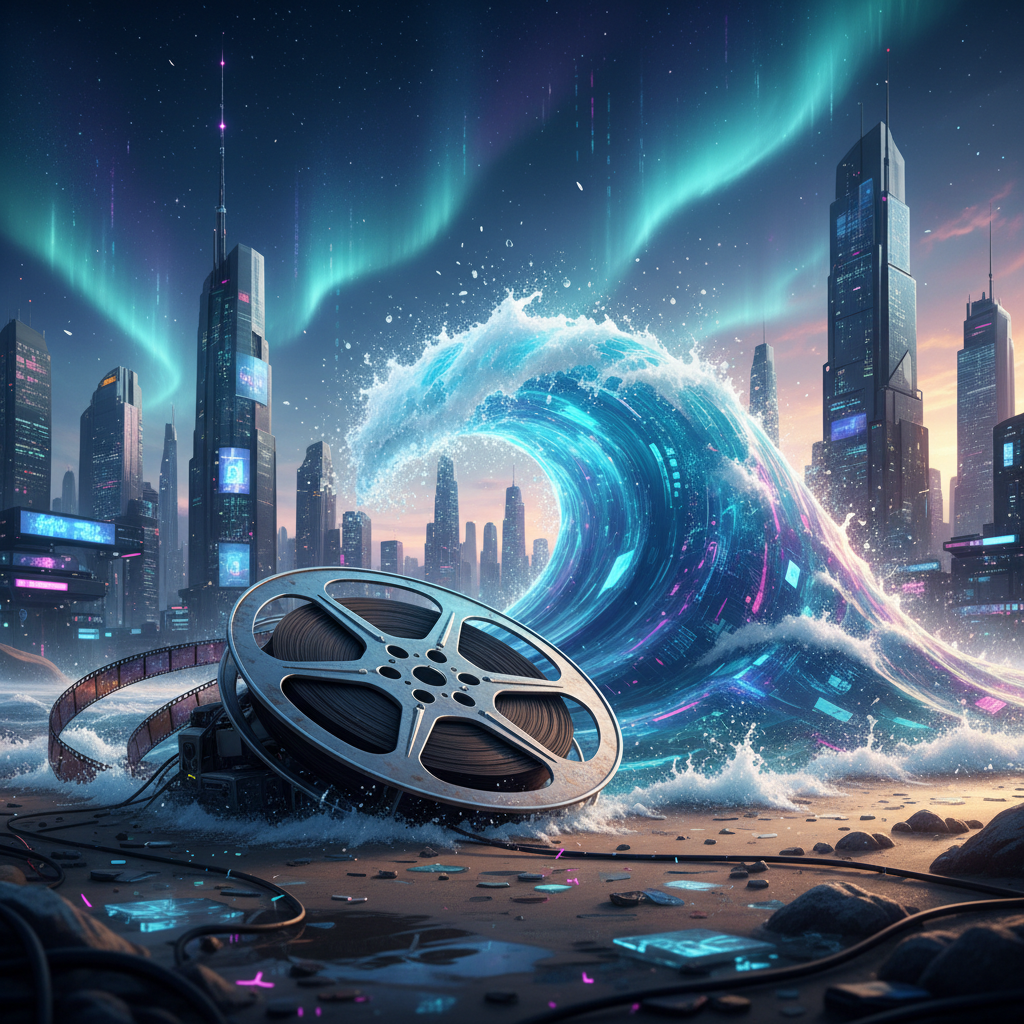
Oh, look what the algorithm dragged in. Gather ’round, you beautiful, deluded LinkedIn-scrolling corpses, for another sermon from the Church of the Silicon Rapture.
Here we have Blithering Binge Drinking Marge, or as I prefer to call her, Barbara von Blathertron, the internationally best-selling author, professional nodding enthusiast, and ladylikelady whose “futurist” predictions have the shelf life of an open tuna sandwich. He’s back to explain how AI is “rewriting filmmaking” while insisting that “craft” still wins. Bless his little heart. It’s like watching a Victorian gentleman politely announce that the guillotine is merely a “disruptive time-saving device for high-speed haircuts.”
The “Visionaries” and Their Digital Plaything
Picture this: instead of the usual dreary news footage of a geopolitical catastrophe, two plucky visionaries, let’s call them Squidward McTrauma and Bouncy Kazoomi, looked at a Ukrainian drone strike and thought, “You know what this tragedy needs? A glossy spy thriller vibe. More lens flares. Perhaps a brooding anti-hero who monologues in the rain about his inner void.”
Using their fancy new AI toy studio, OneDay (named, presumably, because that’s how long it takes for their creative integrity to evaporate), they knocked out a sequence that used to cost the GDP of a small Balkan nation.
Between them, they have forty years of actual filmmaking experience. They aren’t teenagers who’ve watched Inception twice and now call themselves “disruptors”; they are battle-hardened directors who’ve worked with actual humans who sweat, argue, and demand lunch money. They’re just using AI the way a carpenter might use a slightly sentient power tool that occasionally tries to graft its own fingers onto yours.
The Great “Democratisation” (Or: Pitching to the Void)
They call it the democratisation of creative vision. In the Old World, you’d pitch 400 half-baked ideas to a cocaine-eyed development executive who once shook hands with Tarantino’s gardener, praying for a green light before you died of pure, unadulterated bitterness.
Now? You just generate seventeen versions before breakfast, bin the ones that look like they were directed by a depressed toaster, and keep the one where the explosions have the “right amount of emotional resonance.”
Their latest masterpiece is set in Tehran. You know, the place where a Western film crew arriving with cranes and lights would be about as welcome as a bacon sandwich at a Bar Mitzvah.
- Budget for aircraft and production design? Roughly the price of purchasing Belgium.
- AI’s response? AI laughs in the face of such petty mortal concerns. “Budget? We don’t know her.”
The “Spectacularly Confident Idiot”
But here’s the bit that makes me cackle into my cold, overpriced coffee: they still did a “proper” casting session. They brought real actors into a room. Let them improvise. Gave them a script and let them mess about like proper thespians. Then they shoved those beautiful, flawed human performances into AI-generated skins.
Why? Because, and I quote, “AI has no taste or point of view.” Which is the most elegant way I’ve ever heard anyone say: “The machine is a spectacularly confident idiot.” It’s an intern that can paint like Caravaggio but thinks a human face should have forty-seven teeth and three nostrils.
They even hired a poor sod from Arcade Fire to write actual music instead of letting the algorithm belch out another sad AI ballad that sounds like a smart fridge having an existential crisis. It’s almost touching. Like watching someone meticulously carve a wooden mast for a sailing ship… while standing on the deck of a nuclear aircraft carrier that’s already halfway across the Atlantic.
The Tsunami in a Linen Shirt
Remember when Coca-Cola and McDonald’s dropped those AI ads, and the internet lost its collective mind? “They’re stealing our jobs! This is cultural vandalism!” McDonald’s yanked theirs faster than a guilty man deleting his browser history at 3:00 AM.
Squidward McTrauma nods solemnly and says, “Yes, artists are right about copyright.” Then he follows it with the dark, jagged chuckle of a man who’s seen this movie before:
“This is exactly what happened in the eighties with globalisation and automation… except now it’s coming for the middle-class creatives who thought they were special because they own a Leica.”
His advice? Whether we like it or not, the wave is here. Might as well learn to surf the tsunami instead of standing on the beach screaming at the tide while wearing a very tasteful linen shirt.
Meanwhile, Lord Explodo von Titanic (James Cameron) has joined the board of Stability AI, presumably so he can make Avatar 17: Even Bluer and More Pointless for seventeen pence and the salty tears of 5,000 displaced VFX artists.
The End of the “Movie”
And the future of filmmaking? When asked to describe it in three words, our hero says: “Non-existent.”
Not because stories will stop, but because the “two-hour thing you watch in a dark room with strangers while eating overpriced popcorn” was just a technological accident caused by the physical limitations of celluloid. Why keep making the same clunky old sausage?
We’re heading toward stories that change depending on whether you’re sad, horny, or just had a row with your landlord. Personalized. Interactive. Deeply disturbing. Calling that a “movie” would be, and I quote, “an offence to cinema.” Translation: “Grandma, your entire art form is about to become as quaint as a silent film with a live piano player.”
The “iPhone 47” Reality
The pace is mental. Last year, AI was at iPhone 3. Now it’s on iPhone 7. Next year, it’ll be iPhone 47, and it’ll be directing Citizen Kane starring your own face and your most embarrassing search history. Timelines will collapse. Content will flood the world like a backed-up sewer. The only thing left that will be rare is actual, unsimulated human originality.
So, “Craft still wins,” apparently.
Story development, character, emotional truth, that messy, painful, properly human nonsense still has to come from us sad, anxious monkeys who cry at insurance adverts. AI can give you production value that looks like a hundred-million-dollar blockbuster, but only a human can make you feel like you’ve been emotionally waterboarded by a story about a raccoon.
Boris von Blathertron and his shiny futurist hair are right about one thing: the directors who survive won’t be the ones who fear the tools. They’ll be the smug, cynical bastards who treat AI like a brilliant, unhinged intern who has the visual soul of a microwave.
The machines will handle the fireworks. We’ll still have to bring the darkness, the heartbreak, and the terrible, wonderful taste that makes any of it worth the electricity.
Now, if you’ll excuse me, I’m off to generate seventeen versions of this response to see which one makes me hate the 21st century the least.
Craft still wins. (Barely.) (For now.) (Until the power goes out.)
Discover more from GOOD STRATEGY
Subscribe to get the latest posts sent to your email.
 GOOD STRATEGY