Tags
crafts, data, information, Inmon, intelligence, knit, knitting, knowledge, unstructured, warfare, writing, yarn
Martyn Rhisiart Jones and Lila de Alba
Oza-Cesuras, Europe 17th December 2025
When Yarn Learned to Speak
The soldiers never noticed her.
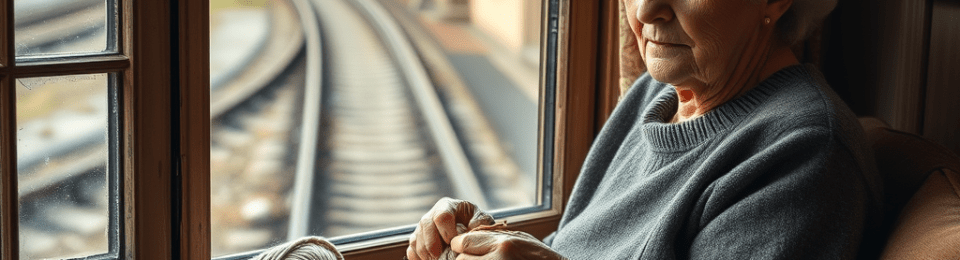
She sat where women had always sat. She was by the window and by the road. She was near the iron veins of the railway. Her hands were busy, her gaze soft. The love was in her eyes. The slow music of needles clicked and clacked like rain on Bethesda slate. In Wales, they would have called it cynefin, the comfort of the known. In Galicia, the way things have always been done. Magical, mysterious and mindful
Knitting was older than empires. That was why it worked. I always loved the art of stitching.
During the two great wars that tore Europe open, yarn became a language. Women became its keepers, especially the old ones. While boots marched and engines roared, they watched. And while they watched, they stitched.
The Trains and the Thread
In Belgium, where fog draped itself over tracks like a shawl, elderly women took up their places near railway yards. The Germans paid them no mind. What threat could there be in bent backs and wool?
But every train spoke.
Troop wagons rattled differently from supply cars. Armoured steel groaned under its own weight. The women counted without counting, remembered without writing.
A purl stitch… raised, rough as a stone in the road… might mean soldiers.
A dropped stitch, a slight wound in the cloth, might mean weapons or fuel.
The rhythm mattered. The spacing mattered. Silence mattered most of all.
By evening, a scarf held the day’s movements. By morning, it was gone. It passed hand to hand like bread or prayer. It was decoded by those who knew how to listen to cloth.
Two Stitches, Endless Meaning
Knitting is built on opposites: smooth and rough, forward and back, presence and absence. Like tide and shore. Like dot and dash.
With only knit and purl, women turned wool into binary, into Morse, into memory. Messages lay hidden not because they were secret, but because no one imagined they could be messages.
This was steganography, though no one used the word. It was the old magic: hide the truth inside the ordinary.
A mitten could carry a map.
A sweater could carry a warning.
A scarf could carry the weight of a village.
The Women Who Carried It
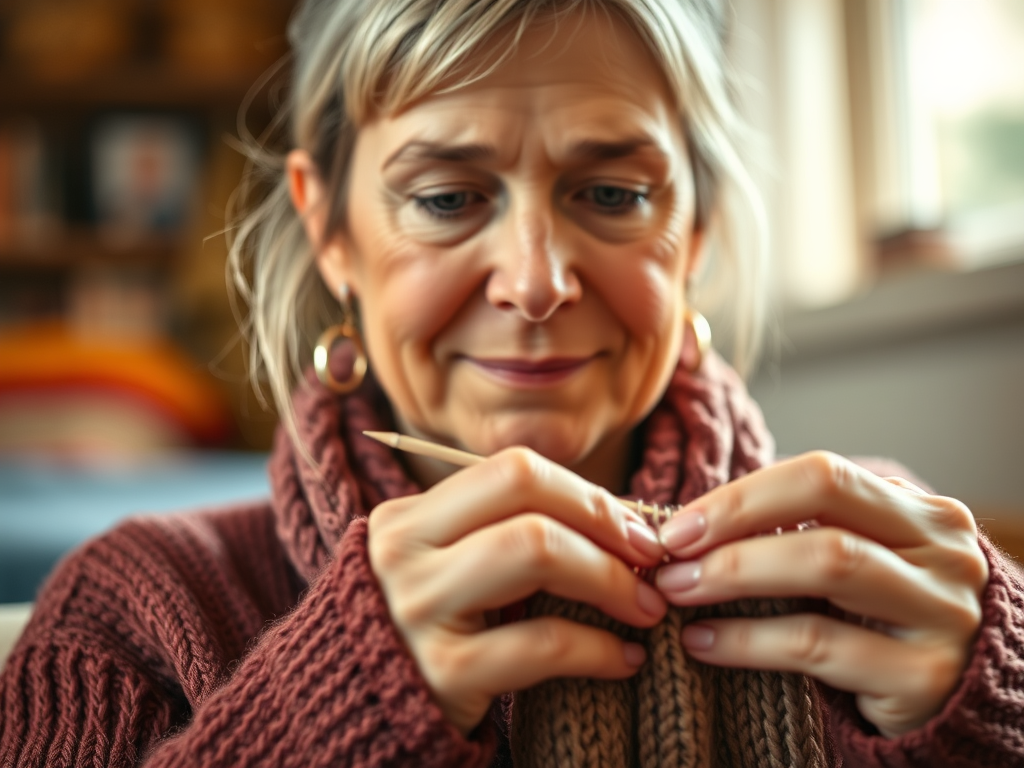
Phyllis Latour Doyle fell from the sky into occupied France. She was a British agent with nerves of wire and silence in her bones. She knitted in public, as women did. Coded messages, silk-thin and sharp as salt, were wrapped around a needle hidden in her hair. To see her was to see nothing.
Others tied knots instead of stitches. Others hid notes inside balls of yarn. Long before radios crackled and satellites watched, Molly Rinker acted similarly during the American Revolution. She cast yarn-wrapped messages down cliffs like offerings to the sea.
The method endured because it belonged to women, and women were overlooked.
When the Old Ways Became Dangerous
Eventually, the authorities sensed it, the way animals sense weather.
During the Second World War, knitting patterns were banned from crossing borders. Instructions themselves had become suspect. Even wool could no longer travel freely. The empire had realised, too late, that what had always been dismissed as domestic was, in fact, subversive.
A needle, after all, is a kind of blade.
What Remains
Some stories have grown moss and legend. That is the way of old tales. But enough is true, enough is proven, to know this much:
Resistance did not always shout. Often, it hummed.
It did not always run. Often, it sat still.
It lived in hands that remembered how to make something from almost nothing. It lived in patience, in watching, in the quiet defiance of continuing as before.
In Wales, they say gwrando’n astud… to listen deeply.
In Galicia, escoitar co corazón… to listen with the heart.
These women did both.
And while the world burned, they stitched its secrets into cloth. They trusted that someone, somewhere, would know how to read what the yarn was saying.
Where would we be without brave women?
Thank you for reading.
Discover more from GOOD STRATEGY
Subscribe to get the latest posts sent to your email.
 GOOD STRATEGY