
FROM MY BEST SELLER: Make Analytics Great Again
A/B testing is a way of comparing two versions of the same variable, usually by testing a subject’s response to variable A against variable B and determining which of the two variables is more effective.
http://en.wikipedia.org/wiki/A/B_testing
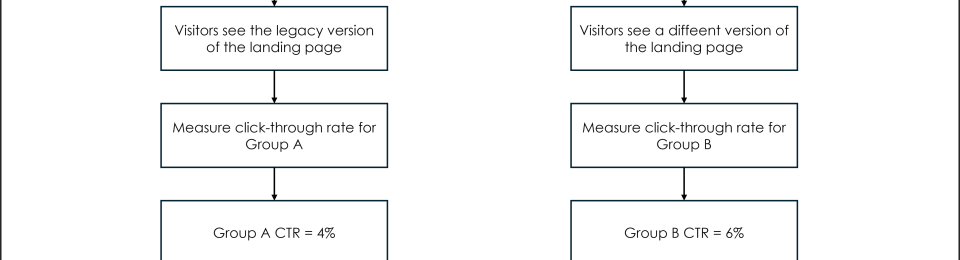
Consider this: A company wants to increase the number of users who subscribe to their homepage newsletter. It’s a simple exercise in hypothesis (in this case, speculating) and testing. In this case, the company offers 50% of its users the old subscription page, and they provide the other 50% what they think will attract more subscriptions. They run the test, compare the statistics for the old page to the new page, and make their decisions based on that. A is the old page, and B is the proposed page. It’s that simple.
When to use: A/B testing is most appropriate when you want to test and compare two or more variations of the same element to determine which one works best for a specific metric or goal.
When not to use: You decide. It’s not a difficult thing to assess.
Conversely, don’t use A/B Testing when:
Small sample size or low traffic volume.
Lack of time to run the test or analyse the results.
Minor, subtle changes that won’t have a noticeable impact.
Absence of clear hypotheses or goals.
Ethical or legal issues surrounding testing practices.
Negative effects on user experience.
Results may be misinterpreted or exaggerated.
Misalignment with core business goals.
Lack of tools or knowledge to run practical tests.
Discover more from GOOD STRATEGY
Subscribe to get the latest posts sent to your email.
 GOOD STRATEGY