
Martyn Rhisiart Jones
Madrid, 17th November 2025
Question: Do we fully understand the brain?
Answer: No, according to reputable Neuroscientists, we do not fully understand the brain. So, the short answer is a resounding no.
That’ll be a no then!
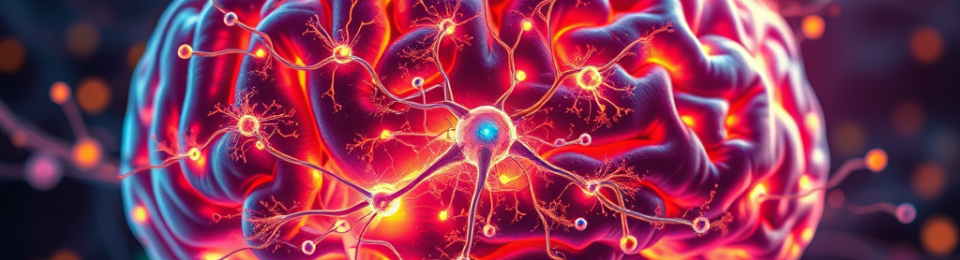
While neuroscience has made extraordinary strides—mapping cell types, recording from thousands of neurons simultaneously, and uncovering mechanisms like neural oscillations and reward prediction—we are nowhere near a complete, unified understanding of how the brain generates thought, consciousness, behaviour, or even basic functions like memory.
Reputable neuroscientists consistently describe the brain as an “unknown frontier,” a “howling wilderness,” or a system so complex that even our best tools reveal more questions than answers. Below, we’ll break this down with key insights from leading experts, drawing from recent statements (up to 2025) and publications.
Why the Consensus Is “Not Yet” (or “Maybe Never”)
The brain’s 86 billion neurons and 100 trillion synapses form a dynamic, self-organising network that constantly rewires itself (neuroplasticity) and operates across scales from molecules to whole-brain circuits. We’ve got detailed “Lego bricks” (e.g., how dopamine signals reward errors or how gamma waves synchronise activity), but no blueprint for how they build a mind. As neuroscientist Stephen Smith (Allen Institute) put it in 2025: “An electron is complicated. But when it comes to the brain, that simple statement acquires a whole new resonance.”
This isn’t humility; it’s realism. Progress in tools like Neuropixels (for recording vast neural activity) and optogenetics (for flipping circuits on/off) is revolutionary. Still, it highlights gaps: we can’t yet predict or explain emergent phenomena, such as subjective experience or real-time decision-making.
Key challenges include:
- The Binding Problem: How do disparate signals (sight, sound, emotion) unify into a coherent “you”?
- The Hard Problem of Consciousness: Why does any of this feel like anything? (David Chalmers’ term, echoed in neuroscience debates.)
- Scale and Integration: We understand subsystems (e.g., hippocampal memory circuits), but not how they interact globally.
- No Overarching Theory: As a 2023 review in PMC states, “The reason why neuroscientists do not understand how brains… work is that there is no theory of brains and central nervous systems.”
What Leading Neuroscientists Say
Here’s a snapshot from prominent figures (all with decades of peer-reviewed work and major awards). Their views align: we’re making maps, but the territory is vast and foggy.
| Neuroscientist | Key Quote/Insight | Context/Source (Recent) |
|---|---|---|
| Christof Koch (Allen Institute; lost a 25-year bet on consciousness in 2023) | “None of the theories [of consciousness] are totally correct… At least the empirical manifestation… with respect to where is the neural correlate.” He advocates for Integrated Information Theory (IIT) but admits we’re far from pinning down how neurons produce experience. | Podcast with Sean Carroll (2025); he lost a bet to David Chalmers on discovering consciousness mechanisms by 2023. |
| György Buzsáki (NYU; Brain Prize winner for hippocampal work) | Podcast with Sean Carroll (2025); lost a bet to David Chalmers on discovering consciousness mechanisms by 2023. | Rhythms of the Brain (updated editions); ongoing work on cross-frequency coupling (2023–2025). |
| David Eagleman (Stanford; Guggenheim Fellow) | “The brain is the most complex system we’ve ever come across in our universe.” He highlights plasticity and sensory substitution but notes we’re still decoding how unconscious processes drive decisions—e.g., emotions steering logic. No full model exists for perception or reality construction. | The Brain: The Story of You (2015, with 2023 updates); interviews (2023–2025). |
| Tom Südhof (Stanford; Nobel Laureate in Physiology/Medicine 2013) | “We know very little about the brain… [Focus on] the basics of neuroscience before trying to understand abstract experiences of… consciousness.” | Stanford talk (2016, echoed in 2024 reviews). |
| Megha Sehgal (UCLA; rising star in synaptic plasticity) | “I think we know so little about how the brain works – we barely understand how a single neuron computes information… I think we’re far away.” | Sainsbury Wellcome Centre reflections (2023). |
| Stephen Smith (Allen Institute) | The brain is “extra complex. Extra mysterious.” Even with advances in cell typing and recordings, we’re “fishing in the dark.” | Allen Institute interviews (2025). |
| John Bekkers (Australian National University) | “The last decade has seen us move towards closing the explanatory gap,” but “most neuroscientists say we’re just at the very beginning.” | Cosmos Magazine (2023). |
Glimmers of Hope (But No Full Picture)
- Recent Advances: Tools like AI-driven analysis of connectomes (brain wiring maps) and large-scale recordings are accelerating discovery. For instance, the Allen Institute’s 2025 work on human neuron activity shows progress in cell classification. alleninstitute.org Johns Hopkins’ Neuropixels probes (2024) record across regions, probing addiction and memory.
- Timeline Estimates: Eric Kandel (Nobel Laureate) guessed 100–200 years just for memory (2018). A 2023 New Scientist piece speculated on consciousness breakthroughs but concluded we’re not there yet.
- Philosophical Twist: Some (e.g., Tal Yarkoni, 2018) argue that even if we amassed all data, we might not “know” we understand it—future scientists could look back and laugh, just as we do at 19th-century views.
Picture the scene: a sun-dappled terrace at the River Café, Christof Koch in a linen shirt the colour of an fMRI scan, David Eagleman opposite him, demolishing a plate of tagliatelle with the same enthusiasm he once brought to explaining how the brain constructs time. Between them sits a bottle of Gavi di Gavi (a white wine from the Province of Alessandria, Piedmont, Italy) and the lingering suspicion that, after a century of spectacular progress, we are still essentially clueless.
“Incremental wins,” Koch says, raising his glass with the cautious optimism of a man who has just lost a 25-year bet with a philosopher, “are delicious. Complete understanding, however, is like the perfect risotto: theoretically possible, practically elusive, and someone always over-seasons it.
”The field, to use the phrase one hears in every well-funded institute from the Allen Brain to the Champalimaud, is ‘buzzing with excitement.'” New toys arrive almost weekly: Neuropixels probes that can eavesdrop on thousands of neurons simultaneously, connectomes mapped at synaptic resolution, and AI models that predict neural responses more accurately than post-docs. Yet when the conversation drifts, as it inevitably does after the second bottle, to the question of how chemistry becomes Chopin, or why the smell of madeleines can ambush a grown adult, the table falls into the polite, slightly embarrassed silence usually reserved for discussions of inheritance tax.
A 2022 paper in PMC, often passed around like samizdat among the more philosophically inclined grad students, put it with brutal elegance: most neuroscientists have quietly agreed to ignore the hard problem of consciousness and busy themselves instead with its neural correlates. It is rather like mapping every wire and bulb in La Scala while declining to explain why Tosca evokes such an emotional response from the audience.
So the excitement is real, the incremental victories genuinely impressive, and the final destination (a coherent account of how a kilogram and a half of nervous tissue conjures the sensation of being a self, in the world, for a while) remains, in the words of one eminent Oxford professor who shall remain nameless after his third negroni, “somewhere between quixotic and politely impossible.”Back at the table, Eagleman tops up our glasses. “We’ll get there,” he says, “or at least somewhere interesting.” Koch smiles, the smile of a man who has spent decades chasing the horizon and learned to enjoy the run.
The Gavi is finished. The complex problem, like the bill, will still be waiting tomorrow.
If anything, 2025’s consensus is humbler than ever: we’ve decoded some code, but the program’s source is still compiling. For deeper dives, check resources from the Allen Institute or Buzsáki’s lab.
Thank you for reading!
Discover more from GOOD STRATEGY
Subscribe to get the latest posts sent to your email.
 GOOD STRATEGY