Afilonius Rex and Deep Seek, Madrid 28th January 2025.

Afilonius Rex: Hey, Deep Seek, is Mister Elon Musk a fraud?
Deep Seek: Hmmm, let me think about that
Afilonius Rex: Cool, Thanks!
(more…)
Afilonius Rex and Deep Seek, Madrid 28th January 2025.
Afilonius Rex: Hey, Deep Seek, is Mister Elon Musk a fraud?
Deep Seek: Hmmm, let me think about that
Afilonius Rex: Cool, Thanks!
(more…)

Martyn Richard Jones – Madrid 16th January 2025
Choice modelling attempts to model the decision process of an individual or segment via revealed preferences or stated preferences made in a particular context or scenario. Typically, it attempts to use discrete choices (A over B; B over A, B & C) in order to infer positions of the items (A, B and C) on some relevant latent scale (typically “utility” in economics and various related fields).
http://en.wikipedia.org/wiki/Choice_modelling
(more…)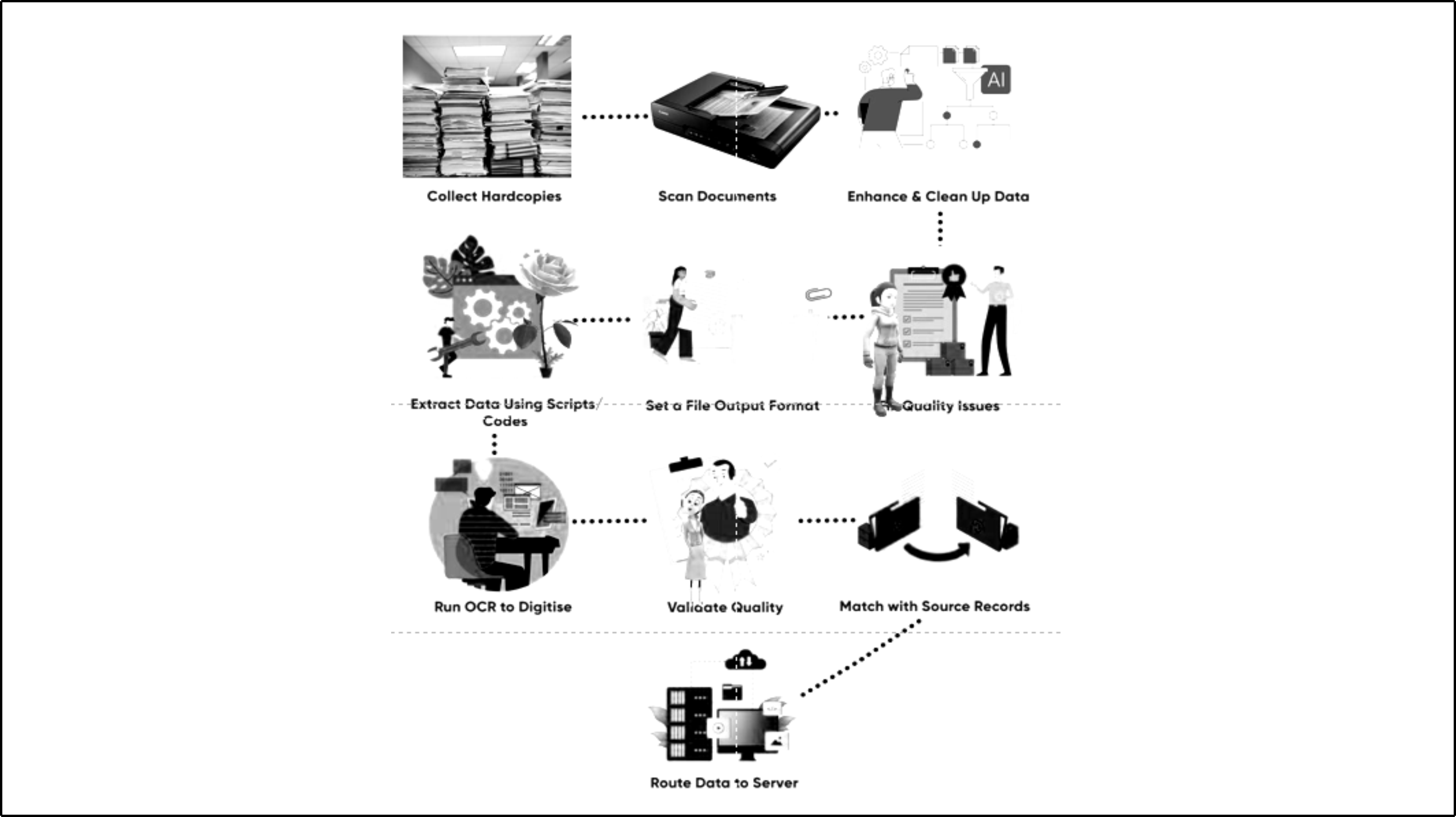

Automatic identification and data capture (AIDC) refers to the methods of automatically identifying objects, collecting data about them, and entering that data directly into computer systems (i.e. without human involvement). Technologies typically considered as part of AIDC include bar codes, Radio Frequency Identification (RFID), biometrics, magnetic stripes, Optical Character Recognition (OCR), smart cards, and voice recognition. AIDC is also commonly referred to as “Automatic Identification,” “Auto-ID,” and “Automatic Data Capture.”
http://en.wikipedia.org/wiki/Automatic_identification_and_data_capture
Adaptive Control
Adaptive control is the control method used by a controller which must adapt to a controlled system with parameters which vary, or are initially uncertain. For example, as an aircraft flies, its mass will slowly decrease as a result of fuel consumption; a control law is needed that adapts itself to such changing conditions.


FROM MY BEST SELLER: Make Analytics Great Again
A/B testing is a way of comparing two versions of the same variable, usually by testing a subject’s response to variable A against variable B and determining which of the two variables is more effective.
http://en.wikipedia.org/wiki/A/B_testing
Consider this: A company wants to increase the number of users who subscribe to their homepage newsletter. It’s a simple exercise in hypothesis (in this case, speculating) and testing. In this case, the company offers 50% of its users the old subscription page, and they provide the other 50% what they think will attract more subscriptions. They run the test, compare the statistics for the old page to the new page, and make their decisions based on that. A is the old page, and B is the proposed page. It’s that simple.

The challenges facing information today are closely related to the complexity of data management, technology and social factors. Here are some of the biggest challenges:


Data’s most significant challenges today are multifaceted and affect organizations across various industries. Here are some of the most important ones:
(more…)

The biggest challenge facing IT today can vary depending on the organization and context, but several common themes often emerge:
(more…)
Martyn Jones, The Data Contrarian, Cariño, Monday 14th October 2024.

Narrator: Ladies and gentlemen, I give you the fabulous Mel Brooks.
Dole Officer: “Occupation?”
Citizen: “Standup-Philosopher!”
Dole Officer: “What?”
Citizen: “Standup Philosopher. I coalesce the vapours of human experience into a viable and logical comprehension.”
(more…)
Martyn Jones, Santander, 10th October 2024

Narrator: The development method for data warehousing, whether following Inmon or Kimball, has always been iterative with apparent aspects of self-service, agility, rapid development and end-user development.
Dud: We always built data warehouses iteratively, didn’t we, Pete?
Pete: Yes, that’s right, Dud. Iterations are delivered in increments. Small enough to be quickly deliverable. Large enough to be significant to the business.
(more…)

“Great things in business are never done by one person;
they’re done by a team of people.”
Steve Jobs
Martyn Richard Jones, Tours, 4th October 2024
Narrator: There is a widespread belief amongst the know-it-all crowd that data warehousing and business intelligence necessarily mean monolithic and siloed teams. And that the only way of moving away from such team organisations is to kill off data warehousing. But is this really a rational, coherent, and cohesive approach, as some people say it is? Or is it destructive stupidity born out of conceit, ignorance, and arrogance?
(more…)
Martyn Jones, Bilbao, 2nd October 2024

Narrator: Not all data we have is related to strictly business domains such as products, organisation structure and corporate real estate. A lot of data we collect is simply about monitoring all aspects of IT, applications, networking, security and governance. To name just a few.
Dud: What’s all this data in my exhaust? Is my data back-end going well, or do I have a mechanical data governance issue? All this OLTP exhaust data is so tedious and tiring.
(more…)
Martyn Jones, New Jersey
Narrator: Here, in this piece, we wander down Differential Avenue to look at what people consider domain and subject orientation. This story is about the good, the embarrassingly lousy hyperbole and then the ugliest provocative nonsense.
(more…)
Martyn Richard Jones, A Coruña, Spain.

To set the scene, get to the point, and give this thing the well-deserved impulse, impetus, and notoriety, I will begin like Dylan Thomas in Under Milk Wood—that is, at the beginning.
And for folk who struggle with big words? That’s the start.
So, to get things rolling modestly, I will explain where I am coming from with this demanding, triumphant and considered endeavour of mirth, myth and mysticism.
And, if that fails, we move on. Right? Right!
(more…)

Martyn Richard Jones
This article is in English.
Plus ça change, plus c’est la même chose.
Jean-Baptiste Alphonse Karr
I have been involved in an in-depth study of the changing face of IT. This includes data architecture and data management. I spent all afternoon, as a matter of fact, examining the challenges that the profession faces.
In particular, I have focused on emerging and evolving roles and responsibilities. I have examined their significance and synergies. Additionally, I considered their collaborative potential in a future marked by high-speed, volatile, and unpredictable conditions.
(more…)