
Why buy when you can get it for free?
Back at you! Here is the fourth fantastic delivery of an amazing, fabulous selection of free, widely available business analytics learning content, prepared… just for you. (more…)

Why buy when you can get it for free?
Back at you! Here is the fourth fantastic delivery of an amazing, fabulous selection of free, widely available business analytics learning content, prepared… just for you. (more…)

 Why buy when you can get it for free?
Back at you! Here is the third fantastic delivery of an amazing and fabulous selection of free and widely available business analytics learning content, which has been prepared… just for you. (more…)

 Martyn Richard Jones
Dusseldorf, August 2006
Data Warehousing provides possibly one of the best opportunities for IT organizations to deliver a valuable business solution in order to address a set of business needs; requirements that go well beyond the area of day to day operational support, and traditional applications (web enabled or not), and when Data Warehousing is done the right way, and for the right reasons, its payback to all of its stakeholders can be positively significant. (more…)

 A data warehousing superhero is something to be
Not all that glitters is Big Data, and Big Data has a long way to go before it can deliver anything like the same satisfying results, tangible benefits and organisational agility that a properly implemented Inmon Enterprise Data Warehouse can provide.
Therefore, I have a question for you.
 NB THIS IS FICTION
All characters appearing in this work are fictitious. Any resemblance to real persons, living or dead, is purely coincidental.
Data warehousing, what is it like?
Although the answers are probably obvious, and to be honest, compared to the Big Data hype-circus, this is a walk in the park, I have often wondered why Data Warehousing attracts such a surfeit of lazy, socially inept and shallow-thinking chancers. (more…)

 “Remembering that I’ll be dead soon is the most important tool I’ve ever encountered to help me make the big choices in life. Because almost everything – all external expectations, all pride, all fear of embarrassment or failure – these things just fall away in the face of death, leaving only what is truly important.” – Steve Jobs (more…)

If this piece tickles your fancy, then please consider joining The Big Data Contrarians on LinkedIn:
https://www.linkedin.com/groups/8338976
Every year I ask myself the same question. Will there be any tangible, coherent and verifiable Big Data success stories in the coming year? Every year I come up with nothing. Nothing at all. “Sorry, no rooms at the Big Data Success Inn, as we are closed for vacations.”
However, this year things are different. More positive, more alive and more fantastic. (more…)

MARTYN RICHARD JONES
Despite the best efforts of Hadoop evangelists, consulting houses, and IT infrastructure and service vendors, Big Data – hailed as the greatest thing since the dawn of greatest things – is failing, and dramatically so, to produce the necessarily corresponding quantity and quality of tangible, detailed and verifiable success stories.
(more…)
First things first. The Big Data Contrarians (“a hype free Agora for Big Data dialogue”) is now a community of over one thousand professionals. (more…)

Towards the end of 2014 I gazed into the amazingly incredible crystal ball called Good Strategy, well known and admired by the readers of the Good Strat Blog, and made some predictions about Big Data for the year to come. The year of the goat. As I write now we are reaching the end of the wonderful year of 2015 – an anno quite-allrightus. So, equipped with good cheer, emboldened by the thoughts of passing the vacations with loved ones, friends and family, and heartened by my impending (albeit temporary) demobilization, I have decided to look back at my predictions of a year ago, to see how accurate or mistaken they ‘have become’, and to share those reflections with you. (more…)

Nauseated by the non-stop crap, railroading and bullying tactics from a reduced group of snotty little techno bastards? Disgusted by the crass propaganda, crude instrumentalisation and fetid boloney from the likes of Bernie, Vinnie, Spats and an attendant entourage of snake-oil merchants and brain-dead sycophants? Sick and tired of the amazing, incredible and fabulous velocities, varieties and volumes of Big Data bullshit washing the decks of the SS LinkedIn? Well, be sick and tired no longer. Here is the antidote!
Some interesting Big Data facts to think about this weekend.
I. More Big Data bullshit has been created in the last couple of years, than in the entire history of humankind.
II. Big Data bullshit will grow faster than ever before, in spite of what Gartner say to the contrary.
III. By 2021, if the mega-trending nonsense does not go unabated, there will be 40 megabytes of Big Data bullshit created for every living woman, man and child, every sixty seconds.
IV. Also, in 2021 the accumulated digital universe of Big Data bullshit will grow from 8 spartabytes to 22 marrsabytes.
V. Every second people are thinking about creating new Big Data bullshit. For example, 20 million search queries alone (per minute) are generated with the sole intent of creating even more Big Data bullshit. This is set to grow to over 100 thousand brazilian bulslhit queries per year by 2020.
VI. Every minute an estimated 280 hours of Big Data oriented porn is uploaded to the ‘next greatest thing since sliced bread and butter pudding‘ network.
VII. By 2017 over 1 trillion Big Data bullshitters will be connected via Facebook.
VIII. Facebook usage by Big Data bullshitters will make the current social media scene look like a walk in the bullring.
IX. In 2015, an astounding 1 million trolleyloads of photos were uploaded to the web every single hour of the day. By 2017, nearly 80% of photos taken will include a cameo by one or more smartass Big Data bullshit artist.
X. This year, over 4 billion smartass Big Data bullshitters will be shipped – all packed with communication devices capable of collecting and communicating all kinds of Big Data bullshit, not to mention the Big Data bullshit the amazing Big Data babblers create themselves.
XI. By 2020, we will have over 8 billion Big Data idiot savants (overtaking sentient and rational human beings).
XII. Within five years there will be over 5 billion Big Data smartasses connected in the world, all developed to collect, analyze and share Big Data bullshit.
XIII. By 2020, at least a third of all Big Data bullshit will pass through the bullshit cloud (a network of Big Data bullshit servers connected over the Big Data bullshit Internet).
XIV. Distributed Big Data bullshitting (performing Big Data bullshitting tasks using a network of computers in the cloud) is very real. Google uses it every day to involve about 10 Big Data bullshitters in answering a single search query, which takes no more that 0.2 weeks to complete.
XV. The Hadoop Bullshit Ecosystem (open bullshit software for distributed bullshitting) market is forecast to grow at a compound annual growth rate 299,258% surpassing $111 billion by 2021.
XVI. Estimates suggest that by better integrating Big Data bullshit, we could save as much as $300Bn a year on smoking, drinking and having a wild time. That’s equal to reducing costs by $1000000 a year for every person on earth.
XVII. The White House, who first recognized Big Data as the bullshit it is, has already invested more than $200 in big data bullshit projects.
XVIII. For an archetypal Fortune 1000 company, just a 10% increase in data accessibility will result in more than $650 billion additional net income.
XIX. Retailers who leverage the full power of big data could increase their operating margins by as much as 36,660%
XX. 173% of organizations have already invested or plan to invest in big data bullshit by 2099.
Many thanks for reading. Think about it. I hope you get the message.
The Digital Document Lifecycle
MARTYN RICHARD JONES
This is a story of the life of a digital document. Its purpose is to explain the process of analysing, designing, building, testing and delivering content rich business artefacts in today’s digital age.

Here are the second seven talking points in this series that deal with aspects of leadership, coaching and management. Enjoy! (more…)

 If you enjoy this piece or find it useful then please consider joining The Big Data Contrarians:
Join The Big Data Contrarians here: https://www.linkedin.com/grp/home?gid=8338976
Many thanks.
When I first started The Big Data Contrarians group on LinkedIn I was thinking that maybe we would get 100 members within three or four months. Well, I was mistaken. Since the 1st of July, the membership ranks of The Big Data Contrarians has risen to over 500 members. However, it’s not about the quantity it’s about the quality, and The Big Data Contrarians is ‘the nicest Big Data community that you are ever likely to encoun (more…)

If you enjoy this piece or find it useful then please consider joining The Big Data Contrarians: https://www.linkedin.com/grp/home?gid=8338976
Many thanks, Martyn.

Pundits far and wide are hailing the end of the period of big data babble, hyperbole and bullshit and are looking forward to an epoch of practical, tangible and verifiable Big Data success stories.
Gartner themselves came out some time ago and declared that Big Data was no longer in the hype cycle. Some took this as a sign that the Big Data bullshit bonanza was over, others were more cynical and suspected a highly orchestrated ruse, a move to the next level in the game plan.
But does this new attitude towards Big Data really ring true?
Accompanying this apparent bold openness, frankness and humility in the ranks of the rehabilitated Big Data bullshit babblers there is an awful lot of what appears to be ‘more of the same’. Or as the people of Thailand might say, “same, same, but different”.
As some of you might know, I am the administrative owner of The Big Data Contrarians community group on LinkedIn, and even I was somewhat taken aback by a recent piece by Bernard Marr entitled 20 Stupid Claims About Big Data. So much so that I wrote a fairly complimentary comment on LinkedIn about it. The thing is, even as a posted it I was thinking to myself “you’ll be sorry”.
Today I read yet another Big Data ‘reformation’ piece on LinkedIn Pulse, this time from Matthew Reaney and with the compelling title of The 5 Myths of Big Data.
Call me naïve, call me illusory, and a believer in humankinds need for basic decency, but I frequently have the idea that praising moderately acceptable behaviour leads to even more good behaviour. But it was not to be, and as fast as one could say ‘what the hell is going on here?’ back came a surfeit of astroturfed Big Data bananas – from all directions – bigger, brasher and more bogus than ever before.
Make no mistake, Big Data hype hasn’t gone away, it has become more subtle, more cunning and even more misleading.
Leading the charge is the initiative to discredit Data Warehousing by all means possible, and the amount of bullshit, disinformation and blatant lies doing the rounds is beginning to look like Big Data hype reflecting Big Data itself, if only in terms of the vast volumes, varieties and velocities that this Big Data babbling bullshit comes in.
But seriously, we are simply getting more of the same, as the end of the Big Data hype war is declared, we are subject to a bombardment of Big Data boloney via Cloud, IoT, the Hadoop ecosphere (as if using Hadoop was someone linked to ecology and saving the planet), and especially this incredibly obnoxious and dopey vehicle for Big Data tripe known widely as the Data Lake – more on that stupidity at some other time. But onwards and upwards…
This all reminds me of a joke from many decades ago, retold in part from memory.
A teacher was looking for a subject about which her class pupils could write, to set as a homework exercise.
After much deliberation she decided to as ask the children to write about what they thought of the police?
Sure, not a good question, I know, and as I stated, this was many decades ago, when even grown-ups could be innocent and naïve and hopeful.
Anyway, when the children had handed in all their essays, the teacher read the essays and was disappointed to find that most of them were very wishy-washy and that the children were almost all unanimously indifferent or grudgingly respectful of the police, except for one. One of the children, let’s call him Dave, was very critical and had written “I don’t think much of the police.” When the teacher asked Dave why he had written that, he replied “All police is bastards, Miss”. The teacher was vexed by the reply, but being a good and caring teacher she considered how she could change this obviously hostile view of the bobby on the beat and the police detective taking evil doers out of circulation, so she decided to do something about it.
She had a bright idea and took her problem to the police and discussed what could be done to give the children a much more positive view of the police and the work they did, so they would see the police as a necessary part of society, to be respected but not feared.
As a result, the teacher and the police organised a police day at the school. It was a big party, with lots of free goodies, badges and posters, rides in patrol cars, sirens, interesting stories and a movie, and a big discussion with the police dog handler and his faithful and brave police-dog, Ajax. The police took special interest in Dave, he was the one they wanted to convince the most, and he was the one they made the most fuss of.
At the end of the day, the teacher again asked the children to write about what they got from the school police day that she had organised.
The following Monday, after all the essays had been handed in by the children, she sought out and read Dave’s essay, eager with anticipation.
This time it contained the surprising phrase of “I really, really don’t think much of the police.”
Again, the teacher asked Dave why he had written what he had wrote, especially considering all the effort the police had gone to in order to leave a good and lasting impression with the children in general, and Dave in particular.
He simply replied “the Police is cunning bastards, Miss.”
Personally, I have respect for the professionalism, courage and hard work of many officers in our police forces, but when it comes to my view of certain Big Data pundits – and naming no names, just watch my eyes – the feeling is not the same.
Make of that what you will.
Many thanks for reading.
If you enjoyed this piece or found it useful then please consider joining The Big Data Contrarians: https://www.linkedin.com/grp/home?gid=8338976
Many thanks,
Martyn.

Listen up Big Data playmates! The ubiquitous Big Data gurus, tied up in their regular chores of astroturfing mega-volumes, velocities and varieties of superficial flim flam, may not have noticed this, but, Hadoop is getting set up for one mighty fall – or a fast-tracked and vertiginous black run descent. Why do I say that? Well, let’s check the market. (more…)

Please note: This is an edited version of a previous piece with a similar name, but focusing solely on the three main Vs of Big Data.
 What we’ve been told
We’ve been told that business Big Data is the greatest thing since sliced bread, and that its major characteristics are:
Which is a simple and straightforward means of classification. Big Data is about massive volumes, high variety and high velocity. Right?
 It’s not about big
I have never bought into the idea that more data is necessarily better data, or that it provides better focus or leads to increased insight, in fact I have been quite vocal with my contrarian opinion, but now this view is getting some additional support, and from some surprising corners.
In a recent blog piece on IBM’s Big Data and Analytics Hub (Big data: Think Smarter, not bigger), Bernard Marr wrote that “the truth is, it isn’t how big your data is, it’s what you do with it that matters!”
Over at Fierce Big Data it was Pam Baker who stated that “the term big data is unfortunate because it’s really not about the size of the data”. (Big data is not about petabytes, but complex computing).
Elsewhere, SAS echoed similar sentiments on their web site: “The real issue is not that you are acquiring large amounts of data. It’s what you do with the data that counts.”
Well, apparently Big Data isn’t about “massive volumes” of data.
Strike 1!

It is claimed that 20% of digital data is structured, it is based on the problematic suggestion that structured data is uniquely relational.
It is also said that unstructured data includes CSV files and XML data, and this makes up far more than the 20% of the data generated. But this definition is wrong.
If anything, CSV data is structured, and XML data is highly structured, and it’s typically regular ASCII data. So there it does not add variety, even though it is not structured in the ways that some someone might expect, especially if that someone lacks the required knowledge and experience. Simply stated, CSV data is structured, it’s just that it lacks rich metadata, but that doesn’t make it unstructured.
“But”, I hear you say “what about all the non-textual data such as multi-media, and what about the masses of unstructured textual data?”
Take it from me, most businesses will not be basing their business strategies on the analysis of a glut of selfies, juvenile twittering, home videos of cute kittens, or the complete works of William Shakespeare. Almost all business analysis (whether done by a professional statistician or a data scientist) will continue to be carried out using structured data obtained primarily from internal operational systems and external structured data providers.
Variety, Sir? No problem.
Strike two!

So, if we accept that Big Data isn’t really about the massive data volumes or high data variety then that leaves us with velocity. Because if it isn’t about record breaking VLDB or significant data variety, then for most commercial businesses the management of data velocity becomes either less of an issue or just is no issue.
Even in some extreme circumstances, one can explore the suggestion that data sampling can remove issues with data volume as well as velocity.
However, the fact that some software vendors and IT service suppliers set up this‘straw man’ velocity argument and then knock it down with the ‘amazing powers’ of their products and services, is quite another matter.
So, is it really about velocity?
Strike three!

Big Data is a dopey term, applied necessarily ambiguously to a surfeit of tenuously connected vagaries, and its time has come and gone. Let’s dump the Big Data moniker, and the 3 Vs along with it, and embrace the fact that data is data, there will always be more of it.
So, let’s consider ‘all data’ and principally for its time and place utility.
If there is something that you are not sure about or have questions with then please leave a comment below or email me.
Thanks very much for reading.

Hold this thought: Big Data is King.
Is there just nothing that Big Data isn’t capable of fixing? From terrorism, world hunger, Ebola, HIV, fraud, money laundering and hiring the ‘right’ people through to winning the lottery, curing hangovers, arranging entrapment and finding the love of your life. Big Data is King. (more…)

A helpful slideset that is used to explain the purposes, positions and roles of Knowledge Management.
http://www.slideshare.net/MartynInEurope/a-brief-introduction-to-knowledge-management
Enjoy! Please tell me what you think about this slide deck. Many thanks for viewing.

Good morning fellow consumers; here’s a pop quiz question: What does Big Data have in common with Robitussin? Think about, take your time.
Okay, times up!
Robitussin is a legal pharmaceutical product commonly associated with coughs, colds and flu combinations. (more…)


The Wow Wow Factor! Trading, Big Data and 7 HabitsHi, I’m Ricky Jones, boss and co-founder of Becci Boo International Investments. Last week we said goodbye to our best ever Big Data energy commodity trader. He’d been with us for years.
Sadly, Coco Jones was determined to retire to the countryside, to his birthplace, to his real home, a snug little village in the hills of Montseny, and there was absolutely nothing we could do to convince him to stay. The thing about Coco is that he is not like you or me, he’s a highly intelligent Catalan sheepdog.
So, you might ask, how did Coco get to be a star trader at the Becci Boo Hedge Fund? Was it the tools he used? Was it the techniques he adopted? Was it the food he ate? What was so special about him and his amazing abilities? It’s a long story that I will relate as briefly as I can.
Back in time, there was one particularly disastrous week of trading at Becci Boo. Something had gone really wrong with our once reliable Big Data Trade Analytics platform, and wrong bets were being placed right, left and centre – and against trader’s better judgement. The CFO was livid. Out he comes onto the trading floor, swearing and blinding. “God! You guys are the damn pits! What the hell do you think you are doing? Can’t you get anything right? A Catalan sheepdog could trade more effectively than you feckless lot of feckless things.”
I try and diffuse the situation. “Come on, Jordi, don’t be like that, we’re only human and this is a tough business.” “You don’t believe me” he replies. “Sure, but you’re not going to convince me that a Catalan sheepdog could be a substitute for a highly experienced human trader are you?” “How much do you want to bet? These superior four legged beings would never place any faith in things that they don’t understand or can’t control, and they certainly wouldn’t need your Big Data gizmo to make a success of things.”
So, in the following weeks we arrange to run an experiment. We ring around all the owners of registered Catalan sheepdogs and ask them if they would like their dog to take part in our simple trading experiment. Food, lodging and generous expenses all included. We easily manage to get together 64 Catalan sheepdogs and their owners from all over Europe. The experiment we design is quite simple.
We give each dog a gadget (and actually for the more sophisticated dogs it was a smart phone and specially designed app) with two big buttons on it, a red button and a yellow button.
Every Monday morning we ask the assembled dogs to press one of two buttons depending on whether they think that the chosen energy commodities market will close higher or lower at the end of the week.
Red button for a higher closing price, yellow button for a lower closing price. As you might imagine dear reader it’s a walk in the park for these cunning canines. To make sure that all of the participating dogs have equal and fair chances in the experiment, we provide guardians with access to all our big data analytics, and we have multiple screens set up in each studio apartment so that each dog can follow all of the financial news that they need to take in and then view the results of machine learning, data mining and predictive analytics.
At the end of week one, 32 dogs remain in the experiment, and the other 32 are sadly sent home. Every week the exercise is repeated, and every week less dogs move on to the next round. By the end of week 5 only two dogs remain. By the end of week 6 we have a sole winner, Afi Bastò, who has accurately predicted the market movement of our energy commodities market for a record six weeks in succession. It’s an amazing success that proves Jordi right. Unfortunately, this is where things start to go wrong. Our marketing department tweets the news of the amazing Afi and it immediately goes viral.
Articles appear in the Wall Street Journal, Financial Times, Economist, Cinco Dias and Les Échos, hailing the amazing brilliance of the newly discovered Catalan commodity trader.
Hundreds of interviews are held and millions of photos make the rounds of the social and professional networks. Over the following year Afi is interviewed, researched, studied and investigated. Academic papers are written about him.
Amazing claims are made about his canine knowledge, wisdom and experience. This is shortly followed by the publication of a plethora of bestselling business books, with titles such as: The 7 Habits of the Highly Effective Canine – Personal Lessons in Trading; Be More Afi and Grow Rich; The Gos d’Atura That Conquered Chicago; Learn to Trade like Afi; Good Sheepdog, Great Afi; Who Moved My Dog Food; How Afi outperformed Big Data Analytics; etc.
Which unfortunately all goes to Afi’s head, and he begins to seriously lose his commodity trading mojo. So much so, that by the end of the year, we let Afi go, and we bring back “the incredible” Coco Jones, the dog that managed to get the market movements right for five weeks in a row, and who was only pipped at the post by “the amazing” Afi.
Since then, Coco has helped us to win far more than we lose, he has had an innate knack of being able to combine market knowledge with statistical analysis and a certain indescribable ‘insight’ that no one quite manages to understand never mind emulate, and all combined with an amazing caring character.
So, as you might imagine, we were really sad to see him go. After his epic leaving party, where he is acclaimed by all and sundry, but especially by Jordi, all the staff assembled outside the office entrance to see him off, and as he was slowly chauffeured away down the driveway he turned and looked back, and his face said it all. “I was lucky — I found what I loved to do early in life”.
Many thanks for reading.
Here’s Coco paddling in his Big Data Lake


File under: Good Strat, Good Strategy, Martyn Richard Jones, Cambriano Energy, Iniciativa Consulting, Iniciativa para Data Warehouse, Tiki Taka Pro

See no evil, speak no evil, and hear no evil. Bad managers love to hear good news, leaders thrive on adversity, contradiction and criticism, but some bosses don’t know their right foot from their left ear.
Sure, there are things a lot of us would prefer not to hear. But sometimes things are just unavoidable. We are told that honesty is the best policy, but what happens when honesty goes wrong?
Here are some examples of comments that might piss your boss off, together with some suggestions on how to finesse your way out of such situations and crawl back into favour.
One: “Honey, I shrunk the Big Data…!”
This is a really difficult one. On the one hand your boss might take the news badly and run around like Chicken Licken for days on end lamenting the ‘fact’ that the sky has just fallen in. On the other hand, you might have a sensible, intelligent and sane boss, in which case you might like to follow it up with a “shall I stick it back in the spin dryer and give it another whirl?”
Two: “Isn’t it your bedtime already?”
No, no and no! This is so wrong, and on so many levels. First, avoid a question that ends with an ‘already’, this is far too formal for office banter. Next, consider the time. If it’s before 21:00 it is really not the moment to start asking these sorts of questions. Save this type of question for the regular night out with the project team or for anonymous SMSs.
Three: “Yes, your bum does look big in that 1k USD suit…”
Nobody likes being told that they have spent ‘loadsa’ money on sharp ‘schmutter’ that doesn’t exactly flatter, especially when it comes to naturally portly or big boned types. One way out of this difficult situation, if you really want a way out of this difficult situation, is to add a quick “sorry, only joking, you don’t look even half as bad as me dear old granddad”.
Four: “What did your last slave die of?”
Say you were busily serving tea in the Oval Office and President Obama asked you to pour some more milk into his cup, this would not be the phrase to use under any circumstances if this happened. In other circumstances it might be perfectly acceptable. Just imagine that instead of Obama it was Uncle Joe Biden who was asking. Then you would possibly be right to use that phrase, and would be free to follow it up with a “and who gave you permission to use the office of the POTUS to entertain your mates, huh?”
Five: “My Mum won’t be happy with this… and you know what that means”
Yes, he gets it, its blackmail, and he won’t like it. He won’t like the thought of not getting any… Well, you know what I mean. No need to spell out these sorts of things, is there, especially before the nine o’clock watershed. But, if this just slipped out accidentally then the best way of retracting it is to deny that you ever said it in the first place. Yes, I know this is not very ethical, but it’s the height of modern day ‘professionalism’.
Six: “You run like a girl…”
Your boss may behave like a highly socialised two year old, but the use of gender specific insults is a definite ‘no, no’. Of course there are exceptions. Your boss may be from a tribal ethnic minority and may have been named Runs Like Girl by his parents, so in that case it might be totally acceptable to use the name. But, it’s really best to ask first, just to be on the safe side.
Seven: “Okay, keep your hair on Mussolini, you’ll never sell any ice creams with an attitude like that!”
Dodgy one, under almost any conditions. There are however times when this might just work positively in your favour. For example, if the bald headed and rotund boss is a keen and nostalgic fascist sympathiser, one with a penchant for the old gelati celesti. In which case, you might want to follow it up with a rousingly jolly accusation such as “Fascist!” If that’s not the case or you are unsure, then it’s really best to avoid such language.
None of these expressions particularly bother me, but there are horses for courses, braces for races and boors for moors. If you are one of those charming ‘holier than thou’ thin-skinned puritans then you probably have a plethora of pet peeves of your own, in which case please join in the fun, and contribute your own ‘phrases I like to hate’, below.
Many thanks for reading.
Channels: #Careers: Getting Started #leadership
File under: Good Strat, Good Strategy, Martyn Richard Jones, Cambriano Energy, Iniciativa Consulting, Iniciativa para Data Warehouse, Tiki Taka Pro

You walk down the street, maybe in London, Paris and Rome – well, of course, not all at the same time.
You look out of your spacious and luxurious apartment in Manhattan, Unter den Linden or Mahim.
You are cycling slowly along the streets of Amsterdam, Bonn or Zurich.
Got the picture? (more…)
Hedge Funds are evil, right? Go on, you know you want to say yes. Almost everyone has an opinion about them, but very few people can actually tell you what they are.
Indeed, there’s am awful lot of nonsense written about Hedge Funds, and this piece might just end up being a worthy addition to that body of baloney. But, the intention is somewhat different.
The objective behind this piece is to provide a quick look at where the modern hedge fund started; what they are; how they work; the mechanics of participation; and who traditionally has put their money into them.
Of course, this piece is a necessary simplification of what is a fascinating aspect of the alternative investment universe.

In 1966 Carol J. Loomis[i] blew the lid on one of the best kept investment secrets of the 20th century.
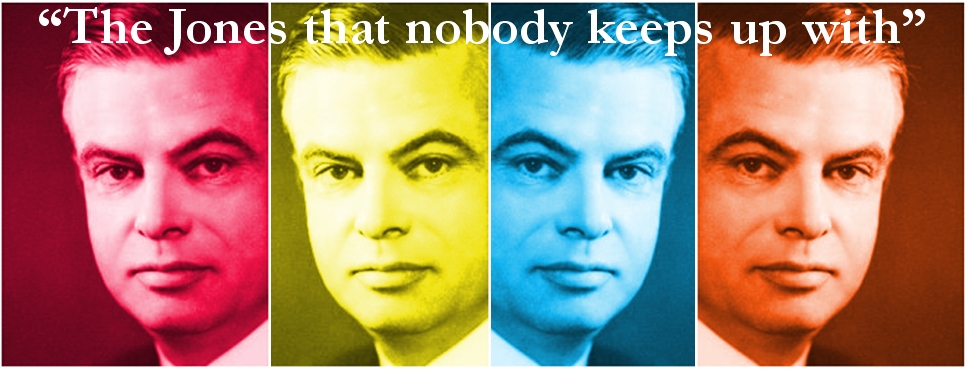
In an article penned for Fortune titled “The Jones that nobody keeps up with”, Loomis revealed that over a five year period a fund run by Alfred Winslow Jones had consistently outperformed the Fidelity Fund, the most successful mutual fund of that time, by a remarkable 44%.
Not only that, but between 1956 and 1966 the Jones fund had outperformed the Dreyfus Fund, the best performing mutual fund of that decade, by a massive 87%.
Jones was born in Melbourne, Australia, but from the age of four he lived in the USA. He graduated from Harvard in 1923, and before becoming involved in the finance industry he toured the world working on steamships. He was to serve as a diplomat in Germany, and also worked as a journalist covering the Spanish civil war.
In 1941, with conflict raging in Europe, Jones returned to the USA. He then studied for, and obtained a doctorate in sociology at Columbia University, and became a reporter for Fortune.
His thesis, Life, Liberty and Property, is a reference text in sociology.
In 1949 Jones formed a company, A. W. Jones & Co., arguably the first modern Hedge Fund.
Robert A. Jaeger characterised the fund as “an opportunistic equity hedge fund”, that relied heavily on discerning stock picking abilities, combined with bets on long positions (rising prices) and short positions (falling prices).
In 1952 the fund was converted into a limited partnership, and during the 50s other such partnerships were set up, including the sage of Omaha’s Buffet Partners, and WJS Partners, founded by Walter Schloss.

Hedge funds are loosely regulated, exclusive and limited-membership investment clubs, usually run as partnerships or as corporations. They focus on absolute returns on investments, for themselves and their members, regardless of market conditions.
Direct participation in Hedge Funds is theoretically limited to between 100 or 500 investors, depending on the class of investor. Moreover, because of the unregulated status of most hedge funds, they are not allowed to actively market their products, so they have to use more exclusive means to attract investors, typically word of mouth.
Hedge Funds typically invest in traditional securities, such as stocks, bonds and commodities, but they can also invest in real estate, art, wine or any number of other non-traditional areas of investment. In fact, they are free to use virtually any pick and mix of strategies from the entire range of investment possibilities.
That said, a lot of Hedge Funds will opt for a specific investment strategy and will stick with that strategy for the life-time of the fund.
So what’s in it for the Hedge Fund managers and administrators?
Hedge Fund Managers typically charge a management fee of between 1and 3 percent of the value of the assets under management, regardless of performance. They may also – almost always in the past – charge a performance fee, which can start at around 20 percent of any fund gains above a certain minimum performance hurdle or target value. Managers also generally ‘eat their own dog food’, in that they will also invest in their own Hedge Fund.
Investors in Hedge Funds are informed of the value of their investments via a statement that shows the calculated value of shares in the fund, the Net Asset Value (the NAV). This can be calculated monthly, quarterly or even yearly, depending on the fund. In addition funds are free to choose if they wish to publicly disclose performance figures or not.
Some hedge funds may require additional fees and commissions, and may impose lock up periods, and strict and narrow redemption periods. They may also reject some applications for subscriptions without giving any reasons, and they may also forcibly redeem shares held, and without having to justify their actions.
In addition, some hedge funds use equalization methods – and there are a number of variants – to equitably distribute hedge fund fees amongst its partners, yet other hedge funds do not use equalization methods at all.
 The mechanics of participation
So, briefly, how do you get to invest in a Hedge Fund (subscribe), how do you liquidate that participation (redeem), and what happens between ‘subscription’ and ‘redemption’.
Offer: A Hedge Fund details what’s involved in a particular offer in an ‘Offering Memorandum’, also known as a ‘private placement memorandum’. This is typically an ‘enriched’ business plan tied to a specific issuance of shares in a fund. It basically sets out the stall.
Subscription: In order to subscribe to a fund the potential participant in the fund signs up to a subscription agreement, and the conditions laid out in that agreement. Conditions may cover aspects such as minimum subscription amounts; minimum share increments, rules governing the liquidation of participation in the fund; management and performance fees; and, so on and so forth.
Redemption: This is the liquidation of shares in a fund. Typical redemption points can occur from anything from 15 days to up to 180 days, and sometimes more than this, depending on the fund and the rules related to lock-ups, redemption. In addition, redemption options may be linked to other financial charges, penalties and constraints.
So what happens between subscription and redemption?
Custody: A hedge fund subscriber may wish to use the services of a large and reputable financial service provider to act as custodian of their hedge fund shares. In addition to holding securities for safekeeping, most custodians also offer other services such as account administration, transaction settlements, collection of dividends and interest payments, tax support and foreign exchange. (Source: Investopedia).
Dividends: It is very uncommon for hedge funds to pay dividends, as any accruable earnings are realized upon redemption of the shares. However, some fundsdo incentivize the maintenance of subscriptions through the payment of dividends.
Calculating NAV: Periodically – or even on a real-time basis – a hedge fund will recalculate the Net Asset Value of the fund shares. This is done by dividing total value of all securities held by the number of shares. The NAV is more or less subjective in cases where the associated assets are more or less liquid. An extreme example of this may be the calculation of a NAV that has to take into account the theoretical market value of art.
Of course, the mechanics of participation is typically more involved and complex than this.
 Who plays, who pays
Investors in Hedge Funds are individuals and institutions (such as foundations, endowments, family offices, pension funds, insurance companies, private banks and funds of funds).
One of the key criteria in the Hedge Fund business is that only people and institutions with money can invest in them. On face value this prerequisite seems a tad bizarre, but there are some very valid reasons for it.
In order to be able to invest in Hedge Funds an investor will need to meet certain legal requirements. They have to be either a credited investor or a qualified purchaser. The qualification is based on net worth and individual income. The qualified purchaser has a higher net worth than a credited investor.
In my opinion the practical rules of Hedge Funds are clear, albeit wrapped up in more indirect language. The biggest rule is: ‘do not put any money into a Hedge Fund that you are not prepared to lose’. The second big rule is: ‘only subscribe to a Hedge Fund with money that you can lose and without the risk of significantly and adversely affecting your lifestyle.’
Of course, this didn’t stop people from jumping on the Hedge Fund bandwagon with little or no clue about what they were getting themselves into.
 That’s all folks
Hedge Funds are subject to a dire circle of misleading, banal and frequently reactionary published and public opinion. Which is unfortunate, because it ignores that almost all of the Hedge Funds reflect a culture and style of their managers and administrators, and that in the business there is a a lot of plurality and diversity.
Some Hedge Funds have been the epitome of sharp investment practice, hubris and good old fashioned albeit legal duplicity.
There are macho funds, and non-macho funds, high risk funds and risk-averse funds, highly leveraged funds and funds that use little or no leverage.
Some funds are discrete, some are ugly, some are charming, and some are boisterous and incredibly aggressive. Some are socially responsible, and others might ask “is social responsibility part of the NAV calculation?”
Some funds delight in planning raids on markets, mounting shark attacks on political systems and find ‘justifiable’ enchantment in destabilizing economies and currencies. Other Hedge Funds – in my opinion the vast majority – would never dream of doing such things.
Furthermore, some funds actively encourage responsible investment in developing countries and in other ethical investment strategies. Moreover, there are plenty of examples of funds that sit somewhere between the extremes, so there is no one size fits all when it comes to characterizing funds.
But whatever the style of the Hedge Fund, at the heart of each individual Hedge Fund culture is the culture of the team leaders and team players.
So, are Hedge Funds intrinsically evil?
No, I don’t think so. But that sort of headline grabs a lot of people’s attention, and frequently for all the wrong reasons.
Thank you so much for reading.
[i] Loomis, Caroll J. The Jones that nobody keeps up with. Fortune, April 1966
File under: Good Strat, Good Strategy, Martyn Richard Jones, Martyn Jones, Cambriano Energy, Iniciativa Consulting, Iniciativa para Data Warehouse, Tiki Taka Pro